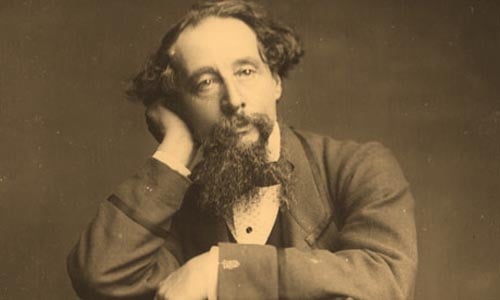
Mr Charles Dickens

Mr Charles Dickens

Friday, November 22, 2013

In Which Mr Headstone Pays Court To The Great And Wonderful Merdle


Of all man’s accomplishments, none is more coveted by Society that the ability to create capital. Consequently, no man is held in higher esteem by Society than Mr. Merdle, who is immensely rich; a man of prodigious enterprise; a Midas without ears, who turns all he touches to gold.  He is in everything good, from banking to building. He is in Parliament, of course. He is in the City, necessarily. He is Chairman of this, Trustee of that, President of the other. He is a philanthropist, and a true friend to the Common Man, whom he employs in vast numbers in his factories and in his foundries and in his mines, and pays them withal for the privilege.
     Mr. Merdle was wont to acknowledge the tributes Society laid before him by inviting it in its multifarious forms to dine at his establishment in Harley Street, Cavendish Square. There gathered magnates from the Court and magnates from the City, magnates from the Commons and magnates from the Lords, magnates from the Bench and magnates from the Bar, Bishop magnates, Treasury magnates, Horse Guard magnates, Admiralty magnates; and amongst all these magnates was Mr. Headstone, whose fortune had elevated him to such a height that he was quite dizzy when he viewed the prospect before him. The talk that evening was of Mr. Merdle’s most recent acquisition. The Bishop magnate had heard the figure of a hundred thousand pounds. Horse Guards had heard two. Treasury had heard three. Mr. Headstone, not wishing to be outdone by the present company, increased the stakes to five, and instantly won the admiration of his circle - for if anything, Society was more impressed by the display of wealth than the acquisition of it.

Tuesday, November 5, 2013

Containing The Whole Science Of Government


Barnacle Junior advised Mr. Headstone to present his case to the Secretarial Department, which was on another floor of the building. The schoolmaster accompanied the messenger up a flight of stairs and into a gloomy passage, where that functionary pointed out the room. Mr. Headstone entered that apartment, and found two gentlemen sitting face to face at a large and easy desk, one of whom was polishing a gun-barrel on his pocket-handkerchief, while the other was spreading marmalade on bread with a paper-knife. Neither of these worthy public servants showed the inclination to provide any advice other than to recommend that Mr. Headstone close the door firmly on his way out. A few steps along the corridor brought him to another door, and in that room he found three gentlemen; number one doing nothing particular, number two doing nothing particular, number three doing nothing particular. Mr. Headstone addressed his petition to the first gentleman, who referred him to number two, who, in his turn, referred him to number three. The third gentleman referred him to a fourth, who, on account of his being a Barnacle, occupied a separate chamber. Number four was a vivacious, well-looking, well-dressed, agreeable young fellow and came from the more sprightly side of the family. This sparkling young Barnacle took a fresh handful of papers from a desk drawer and pressed them upon Mr. Headstone, who put the forms in his pocket and went his way down the long stone passage and the long stone staircase.