Being in need of money and having none of that particular commodity of his own, Mr Headstone resolved to pay a visit to the Old Lady of Threadneedle Street on the expectation that she might introduce him to company who would be willing to relieve him of his pecuniary difficulties. There are men whose whole scope of ideas is limited to Lloyd's, the Exchange, the India House, and the Bank; men who devote their entire lives to the accumulation and veneration of wealth, which devotion finally bestows upon them the largest and the noblest of tombs; men who scorn acts of charity that give no return on investment as instances of bad business; men who remember and record every transaction - no matter how slight - and would sooner cut off a limb than lose a farthing; men - in short - who believe in only two forms of interest - their own, and the compound variety.
Surely amongst these men Mr Headstone would find at least one gentleman who, in the twilight of his years, had become cognisant of the fact that treasures stored up on earth are subject to the attentions of moths and thieves, and that acts of kindness bring far greater rewards. Indeed, on arriving in the City and taking up a position of advantage directly opposite the bank, the pedagogue soon spied such a one. The person in question was a little old man, of about seventy or seventy-five years of age, of a very lean figure, much bent, and slightly twisted. His nose and chin were sharp and prominent, his jaws had fallen inwards from loss of teeth, his face was shrivelled and yellow, save where the cheeks were streaked with the colour of a dry winter apple, and concentrated in a wrinkled leer. This striking septuagenarian was coming down the steps of the bank, carrying a sack, and, judging by the manner in which his accoutrement impeded his progress, it must have been a particularly heavy one.
Observing the gentleman's difficulties, Mr Headstone rushed forward to offer assistance, but, as the eagerness of his desire was expressed in an outward show of precipitousness, he succeeded only in knocking the old man to the ground. An exchange of sharp oaths and profuse apologies were proffered by both parties according to their due, and, before the pedagogue was given the opportunity to state his case, the crooked old gentleman had picked up his sack and hobbled away. Like a thirsty man who has a cup of water pressed to his lips only to have it dashed away in the same instant, Mr Headstone felt the loss of relief more keenly than he would have done had it never presented itself. With a heavy heart he bent down to retrieve his own burden, which he had dropped in the excitement of the moment, and as he felt its weight he realised that in the confusion the old gentleman had mistaken the pedagogue's sack for his own, and had made off with his tom cat. Whether this accidental exchange would prove to be in Mr Headstone's favour is a point that will be addressed in our next communication.
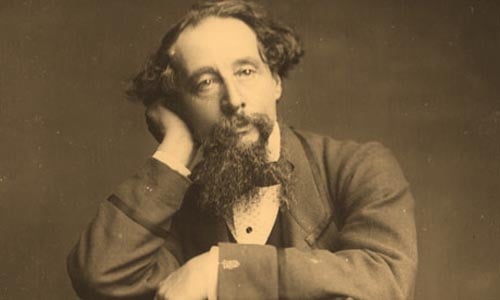
Mr Charles Dickens