After some deliberation Mr Tappertit decided that the most fitting form of observance to mark the passing of Mr Headstone was a procession of the 'Prentice Knights and the Glorious Apollos through the streets of London, calling at the numerous inns and taverns that had been uppermost in the pedagogue's affections. In accordance with the rules of the society, the proposal was put to the vote of the assembled company of apprentices, and - in accordance with the normal practices of democracy - division and discord at once held sway. The room was immediately divided into those who commended the proposal for its good sense and those who condemned it - in the words of the most eloquent of those in opposition - as a barbaric act of barbarism.
The Ayes being as vociferous as the Nays, there seemed little hope of resolving the debate by reasoned argument, and, as the trading of insults had as little effect as the pulling of noses, it was not unexpected that the company should come to blows in an attempt to settle their differences. Mr Tappertit, who still occupied his position of superiority atop the table, called for calm and restraint, whereupon he was immediately silenced by the blow of a wooden skittle to his temple. When he regained consciousness, he was informed by a somewhat dishevelled Mr Swiveller that a resolution had been reached, and that, on account of their superior pugilistic skills, the Ayes had it.
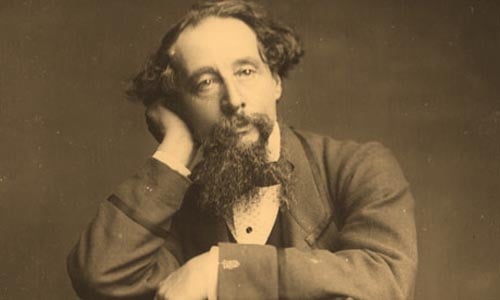
Mr Charles Dickens
Sunday, May 27, 2012
Saturday, May 26, 2012
In Which Admittance To A Secret Society Is Allowed
On learning of Mr Headstone's untimely demise, Mr Swiveller - as a longtime drinking companion of that unfortunate gentleman - felt it incumbent upon himself to inform the acquaintances of the late pedagogue of the sad tidings and to consult with them on the most fitting manner in which they might pay their final respects. Wrapping a ribbon of black crepe around his hat, he set forth to find Mr Simon Tappertit, whose unrivalled knowledge of rituals and secret handshakes made him the font of all wisdom in matters relating to the arrangement of both public and private ceremonies.
Mr Swiveller stopped at a house from whose defaced and rotten front the rude effigy of a bottle swung to and fro like some gibbeted malefactor, and struck thrice upon an iron grating with his boot. The ground seemed to open at his feet and a ragged head appeared. On the provision of a secret password, the clerk was admitted into a vault, the floors of which were of sodden earth, the walls and roof of damp bare brick tapestried with the tracks of snails and slugs, and the close air tainted with an overpowering odour of mouldy cheese. Here, enthroned on a chair of state mounted on a large table and cheerfully ornamented with a couple of skulls, sat Mr Tappertit, dressed in the finery of his office, that being the Captain of the secret society of the 'Prentice Knights.
Mr Swiveller, being a Perpetual Grand of the Lodge of Glorious Apollos, was quite naturally an honorary member of the society of the 'Prentice Knights, and for this distinction he had bestowed upon Mr Tappertit a reciprocal titular honour within the lodge. In consequence of these mutual arrangements, it was necessary for both parties to perform a series of winks, nods, handshakes, rubbing of elbows and tapping of noses whenever they greeted each other as a sign and a mark of their brotherhood. Having given these formalities their due, Mr Swiveller at once informed Mr Tappertit of his melancholy news whereupon that gentleman called for a minute's silence, which interrupted not only the general conversation of the apprentices gathered there but also the progress of a game of skittles that was taking place in a corner of the room. At the conclusion of the minute - or, perhaps, a little before - the revelries were resumed, and the two distinguished leaders of the two distinguished societies began to consider how best to memorialise one of their late members.

Mr Swiveller stopped at a house from whose defaced and rotten front the rude effigy of a bottle swung to and fro like some gibbeted malefactor, and struck thrice upon an iron grating with his boot. The ground seemed to open at his feet and a ragged head appeared. On the provision of a secret password, the clerk was admitted into a vault, the floors of which were of sodden earth, the walls and roof of damp bare brick tapestried with the tracks of snails and slugs, and the close air tainted with an overpowering odour of mouldy cheese. Here, enthroned on a chair of state mounted on a large table and cheerfully ornamented with a couple of skulls, sat Mr Tappertit, dressed in the finery of his office, that being the Captain of the secret society of the 'Prentice Knights.

Mr Swiveller, being a Perpetual Grand of the Lodge of Glorious Apollos, was quite naturally an honorary member of the society of the 'Prentice Knights, and for this distinction he had bestowed upon Mr Tappertit a reciprocal titular honour within the lodge. In consequence of these mutual arrangements, it was necessary for both parties to perform a series of winks, nods, handshakes, rubbing of elbows and tapping of noses whenever they greeted each other as a sign and a mark of their brotherhood. Having given these formalities their due, Mr Swiveller at once informed Mr Tappertit of his melancholy news whereupon that gentleman called for a minute's silence, which interrupted not only the general conversation of the apprentices gathered there but also the progress of a game of skittles that was taking place in a corner of the room. At the conclusion of the minute - or, perhaps, a little before - the revelries were resumed, and the two distinguished leaders of the two distinguished societies began to consider how best to memorialise one of their late members.

Tuesday, May 15, 2012
In Which Mr Swiveller Makes An Entrance
No sooner had Mr Sampson Brass and Mrs Raddle departed the environs of Bevis Marks - leaving Miss Sally Brass in sole command of the attorney's offices and its contents of musty books, yellowed articles, dried jars of ink, and a second-hand wig box - than a commotion in the hallway announced the arrival of Mr Richard Swiveller, who, in the performance of his duties as the clerk of the aforementioned gentleman of law, had just returned from an errand delivering a letter to Peckham Rye. In the execution of this commission, Mr Swiveller had displayed that very spirit of initiative of which careers are made, and - entirely on his own cognisance - had delayed his return to the office in order to partake of some bread and beef and a pint or two of porter at The Old Red Cow in Clerkenwell.
The sun being hot and the porter being strong, Mr Swiveller, who had a liking but not a constitution for drink, found that his indulgence had temporarily deprived him of the co-ordination of his lower limbs. In consequence of which unfortunate state of affairs, he found himself measuring his length on the hallway carpet and staring up at the smoke-discoloured ceiling and the dust and cobwebs that were among the most prominent decorations of the office of Mr Sampson Brass. Here he intended to remain until such time as feeling returned to his extremities, and to while away the minutes he entertained himself with a rendition of several popular melodies.
Mr Swiveller's condition provoked much merriment in the small slipshod girl, whose principal duties in the house were to boil the kettle dry on a regular basis and rearrange the dust and cobwebs with a stunted broom, but failed to find much favour with Miss Sally Brass. Indeed, the lady looked upon the clerk's behaviour as a direct provocation, and, seeing an opportunity to return the compliment, she at once informed the prostrate clerk that his friend and fellow reprobate Mr Bradley Headstone was missing, and very likely presumed dead. On receiving the news, Mr Swiveller modulated his voice and, as a sign of respect for the late departed, sang a more melancholy refrain.

The sun being hot and the porter being strong, Mr Swiveller, who had a liking but not a constitution for drink, found that his indulgence had temporarily deprived him of the co-ordination of his lower limbs. In consequence of which unfortunate state of affairs, he found himself measuring his length on the hallway carpet and staring up at the smoke-discoloured ceiling and the dust and cobwebs that were among the most prominent decorations of the office of Mr Sampson Brass. Here he intended to remain until such time as feeling returned to his extremities, and to while away the minutes he entertained himself with a rendition of several popular melodies.
Mr Swiveller's condition provoked much merriment in the small slipshod girl, whose principal duties in the house were to boil the kettle dry on a regular basis and rearrange the dust and cobwebs with a stunted broom, but failed to find much favour with Miss Sally Brass. Indeed, the lady looked upon the clerk's behaviour as a direct provocation, and, seeing an opportunity to return the compliment, she at once informed the prostrate clerk that his friend and fellow reprobate Mr Bradley Headstone was missing, and very likely presumed dead. On receiving the news, Mr Swiveller modulated his voice and, as a sign of respect for the late departed, sang a more melancholy refrain.
Saturday, May 12, 2012
In Which Some Legal Niceties Are Explained
On receiving the news of Mr Headstone's disappearance, Mr Sampson Brass was overcome with the emotion that naturally besets a professional gentleman at the loss of a client - a feeling that threatened to overwhelm him when he was reminded by his sister that the pedagogue's bill for certain legal services was still outstanding. Miss Sally Brass, who was a lady of thirty-five or thereabouts, of a gaunt and bony figure, with a resolute bearing, assisted her brother in his business, having from her earliest youth devoted herself with uncommon ardour to the study of law, tracing it attentively through all the slippery and eel-like crawlings in which it commonly pursues its way. One of Miss Brass's common strategies for rendering assistance - and, indeed it is quite a common one - was to point out the shortcomings of others whenever an endeavor failed, and furthermore to imply that had the responsibility for its success rested with her, the desired outcome would have been assured. Accordingly, Miss Sally Brass expressed herself of the opinion that a person in need of the protection of the law may be allowed to proffer gratitude to their legal representative a posteriori, but it is a dangerous precedent to allow the payment of the fee to occupy that same position.
Mrs Raddle, who at first imperfectly understood the ensuing conversation between the siblings, at length became apprised of the fact that Mr Brass was out of pocket as a result of Mr Headstone's sudden and unwarranted departure, and was bold enough to suggest to that gentlemen that recompense might be found in an inventory of the pedagogue's belongings, which were currently secured in his rooms to which she possessed the one remaining key.
Mrs Raddle, who at first imperfectly understood the ensuing conversation between the siblings, at length became apprised of the fact that Mr Brass was out of pocket as a result of Mr Headstone's sudden and unwarranted departure, and was bold enough to suggest to that gentlemen that recompense might be found in an inventory of the pedagogue's belongings, which were currently secured in his rooms to which she possessed the one remaining key.
Wednesday, May 9, 2012
Mr Sampson Brass Presents His Credentials
Should any passer-by be in any doubt as to the import and significance of the small dark house whose dirty parlour window overlooked the footway through Bevis Marks, a plate above the bell was inscribed with the words 'Brass, Solicitor' to disabuse them of any lingering uncertainty. If there was an action to be taken, if there was a settlement to be made, if there was a claim to be disputed, if there were grounds for an appeal, if there was a ward of court to be contested over, if there was an unclaimed inheritance - in short, if there was any injustice in the world that could be put right for a fee, then Mr Sampson Brass was the man to engage. This legal gentleman lived by the maxim that if there were no bad people, there would be no good lawyers - in consequence of which philosophy he kept company with misers, hypocrites, crooks, brigands, landlords, usurers, liars, hucksters, perjurers, speculators, and many others of that tribe.
Sunday, May 6, 2012
In Which Mr Headstone's Fate Is Left In The Balance
As the course of this narrative requires that we should become acquainted with a few particulars connected with the domestic economy of Mr Headstone's landlady, Mrs Raddle, and, as a more convenient occasion than the present is not likely to occur for that purpose, we shall take this opportunity to return with the reader to London. If the tree that fell upon Mr Headstone killed him, then our continued presence at the scene of the accident can serve no useful purpose other than to promote feelings of melancholy. If he has survived by the agency of divine intervention or the operation of fool's luck, then we will learn of it presently.
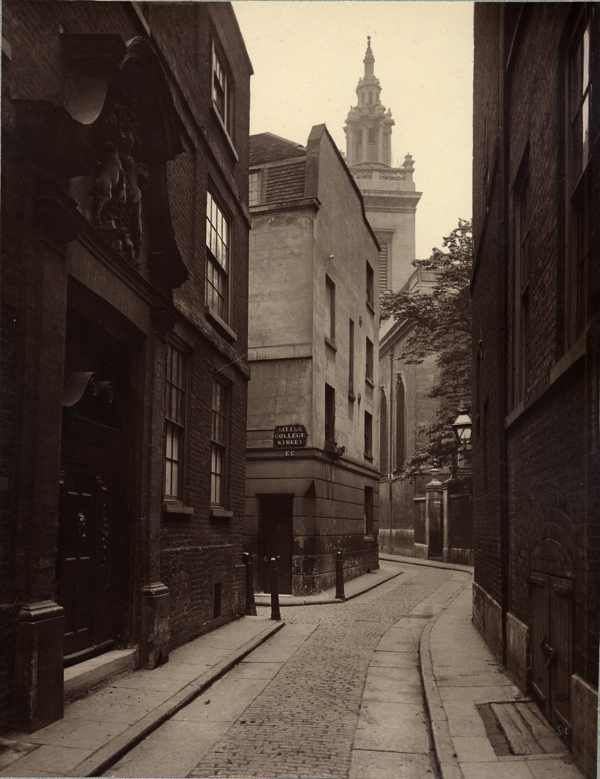
In his haste to inform his acquaintances of his departure for the country, Mr Headstone had forgotten to extend the same courtesy to his landlady. Not being apprised of her tenant's absence until the third of the month (on which date it was customary for her to make pecuniary demands of those who resided under her roof), Mrs Raddle was struck with mortification on the discovery that the pedagogue's rooms had been vacated and that no instructions had been left for the settlement of the rent. In an act of public spiritedness which is to be admired, Mrs Raddle put on her bonnet and at once set out for Bevis Marks for the offices of Mr Sampson Brass, attorney at law, to report the disappearance of Mr Headstone and to make whatever claim for the restitution of her loss that the law of the land would permit.
In his haste to inform his acquaintances of his departure for the country, Mr Headstone had forgotten to extend the same courtesy to his landlady. Not being apprised of her tenant's absence until the third of the month (on which date it was customary for her to make pecuniary demands of those who resided under her roof), Mrs Raddle was struck with mortification on the discovery that the pedagogue's rooms had been vacated and that no instructions had been left for the settlement of the rent. In an act of public spiritedness which is to be admired, Mrs Raddle put on her bonnet and at once set out for Bevis Marks for the offices of Mr Sampson Brass, attorney at law, to report the disappearance of Mr Headstone and to make whatever claim for the restitution of her loss that the law of the land would permit.
Saturday, May 5, 2012
Et In Arcadia Ego
Poets have long praised the merits of a pastoral life wherein man lives in perfect harmony with Nature and enjoys the fruits of her bounteousness. Were Mr Headstone familiar with these opinions - and, as he scorned all but the basest forms of verse and song, he was not - he might have had occasion to dispute them after only a few days spent in Nature's verdant bosom.
First and foremost, he objected to the general arrangement of the countryside, which had not been designed with the comfort of man in mind. There were too many obstacles to overcome - stiles, and gates, and hedgerows - and the paths were never straight or paved, and - save for an occasional milestone by the side of the road - nothing was named or numbered, which made it difficult to find anything with any degree of accuracy.
Furthermore, wild animals were allowed to roam at will and disturb the peace with their cries even in the hours when normal people were in their beds. Beasts of burden and husbandry were permitted to traverse the public highways in large numbers when it was required (for what purpose the pedagogue knew not) to move them from one pasture to another; and they always left the thoroughfare in a less handsome condition than they found it, evidence of which Mr Headstone often collected on the sole of his shoe.
It was one afternoon while the pedagogue was ruminating upon these thoughts that he was overtaken by a storm. The wind began to moan in hollow murmurs and a train of dark clouds menaced thunder and lightning and within minutes large drops of rain had begun to fall. Having no umbrella and not being conversant with the principles governing atmospheric electricity, Mr Headstone took shelter under a venerable oak tree, whose wide spreading branches offered a refuge from the pelting rain. The sky was as black as the devil's waistcoat illuminated only by the flash and glare of forked lighning, a jagged bolt of which suddenly struck the trunk of the oak, cleaving it in two and bringing the ancient timber down upon the unsuspecting schoolmaster's head.

First and foremost, he objected to the general arrangement of the countryside, which had not been designed with the comfort of man in mind. There were too many obstacles to overcome - stiles, and gates, and hedgerows - and the paths were never straight or paved, and - save for an occasional milestone by the side of the road - nothing was named or numbered, which made it difficult to find anything with any degree of accuracy.
Furthermore, wild animals were allowed to roam at will and disturb the peace with their cries even in the hours when normal people were in their beds. Beasts of burden and husbandry were permitted to traverse the public highways in large numbers when it was required (for what purpose the pedagogue knew not) to move them from one pasture to another; and they always left the thoroughfare in a less handsome condition than they found it, evidence of which Mr Headstone often collected on the sole of his shoe.
It was one afternoon while the pedagogue was ruminating upon these thoughts that he was overtaken by a storm. The wind began to moan in hollow murmurs and a train of dark clouds menaced thunder and lightning and within minutes large drops of rain had begun to fall. Having no umbrella and not being conversant with the principles governing atmospheric electricity, Mr Headstone took shelter under a venerable oak tree, whose wide spreading branches offered a refuge from the pelting rain. The sky was as black as the devil's waistcoat illuminated only by the flash and glare of forked lighning, a jagged bolt of which suddenly struck the trunk of the oak, cleaving it in two and bringing the ancient timber down upon the unsuspecting schoolmaster's head.
Subscribe to:
Comments (Atom)