Having eaten his fill of hot buttered crumpets, Mr Headstone felt obliged to sit in front of the fire in an attempt to promote the necessary operation of digestion. Once settled in a position that was closer to the horizontal than the vertical, the pedagogue felt it incumbent upon himself to close his eyes, and, as a result of the consequent deprivation of natural light, he was very soon breathing heavily through his nose, having attained a state that a medical man might easily have mistaken for a stupor.
It was not until two days had passed that Mr Headstone had another opportunity to open his calfskin notebook and turn to the task of recording his opinions on the first of Mr Dickens's great works. He began by writing the date at the top of the page, and, in both the execution of the act and in the contemplation of its issue, immediately became cognisant of the fact that a full month had passed since he had embarked on his great project.
This realisation of the transient nature of life was further impressed upon him by the sudden appearance of a little fierce woman in yellow curl papers, who bounced into the room, and announced, with a lack of ceremony that only long acquaintanceship could have accounted for, that the rent was due at the end of the week. Mr Headstone expressed his gratitude to his landlady for her trouble, and she replied, darting her eyes about the room to receive ocular confirmation of the continued existence of all the fixtures and furnishings, that it was no trouble at all, and that she hoped there would be no trouble on Friday when the bill was due. The interview between landlady and tenant being terminated on such agreeable and equitable terms, the former retired by degrees, three times poking her head around the door like a cuckoo in a clock to issue an advertisement of the approaching date.
Mr Headstone wondered why Time was so often depicted by the poets as an elderly personage with a long white beard when, in his experience, the gentleman was a bustling, harried individual, who - like the mail coach - would wait for no man. Lost in the immense field of conjecture opened by this reflection, the pedagogue gazed out of the window with a meditative visage, and might still be there had not his thoughts been interrupted by the appearance across the way of a pretty chambermaid airing some linen at an upper window of the house opposite.
Recalled to his task, Mr Headstone took up a sharp-nibbed pen and in a schoolmasterly copperplate hand, wrote out the full title of the book as it appeared on the original cover issued in 1836, viz "The Posthumous Papers of the Pickwick Club, Containing a Faithful Record of the Perambulations, Perils, Travels, Adventures and Sporting Transactions of the Corresponding Members". Mr Headstone was of the view that as a description of the contents the title was as scrupulous as a codicil, but as an appellation for referring to the work itself it was as cumbersome as a mangle. And yet, mused the pedagogue in a rare moment of insight, perhaps the rambling title was best suited to the rambunctious episodic manner in which the author narrated the story.
Mr Dickens could not be held responsible for the baggy appearance of the early chapters, which had been written to commission and were originally intended to provide a setting for the ornament of the illustrations by Mr Robert Seymour. The two gentlemen did not enjoy a harmonious professional relationship: Mr Dickens was young - only just twenty four - and fizzed like a bottle of champagne with vigour and ambition; Mr Seymour, fourteen years the author's senior, had had modest success as a political caricaturist and illustrator, but, having chosen his business acquaintances unwisely, was in a permanent state of financial embarrassment. The partnership between the two men was brought to a premature termination by Mr Seymour's decision to shoot himself through the heart with a fowling piece.
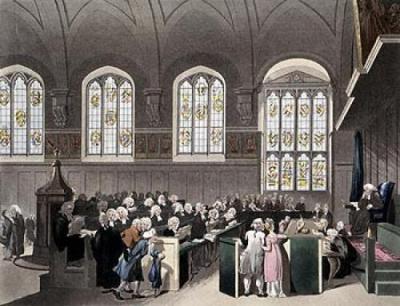
It was, thought Mr Headstone, a remarkable thing that out of such a sorry and tragic beginning there should come such a spirited and jolly work. With its larger than life characters and its improbable episodes, The Pickwick Papers is a book that has enough humour and humanity in it to make even the lawyers in the Court of Chancery laugh out loud, and the judges, too. Mr Dickens celebrates the upstanding and the right-minded, exposes the deceitful and the hypocritical, mocks the pompous and the proud, peeks into the dark corners of the debtors' prison, and then delivers his best-loved characters to a harmonious conclusion of matrimony. Between the pages there is pantomime, intrigue, romance, sentiment, comedy (both high and low), adventure, mystery, and melodrama, and when the final page has been turned and the book closed, the reader feels a sudden loss at no longer being in the company of those excellent Pickwickians and their faithful followers and friends.
Mr Headstone, finding himself becoming affected by the emotional intensity of his own sentiments, put down his pen, and from the shelf took down a copy of Oliver Twist, which, he observed with a certain degree of satisfaction, was fewer than five hundred pages in length.
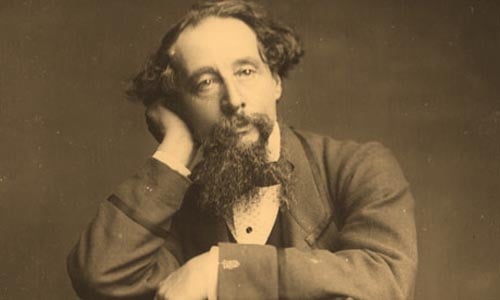
Mr Charles Dickens
Tuesday, January 31, 2012

Sunday, January 29, 2012
In Which Mr Headstone Seeks Inspiration
The next day being Sunday, Mr Headstone was at liberty to do as he pleased, and nothing pleased him more than to stay abed until noon - particularly on a morning when the windows were starred with frost and the air was so cold and sharp that the footsteps of passing churchgoers sounded as if they were in the room itself. By the gradual exposure of his nose and chin to the reviving properties of the circulating drafts of cool air admitted through the chinks and crannies in the walls, Mr Headstone eventually achieved a state of consciousness, and, with his senses recalled to him, became acutely aware of the need for some breakfast.
Wrapping himself in a blanket, the pedagogue swept away the ashes in the grate, rekindled the fire and set a frying pan on a trivet over the flames. Into this implement - much blackened from use - he tossed a string of pork sausages and some raw onions. His endeavours to prevent the contents of the pan from burning with the aid of a toasting fork were hindered by the necessity of preparing at the same time a saucepan of coffee and some hot buttered rolls; and so, when the sausages were eventually turned out onto a platter, they were in texture not unlike the consistency of coal, and of a similar colour, too.
After breakfast Mr Headstone sat himself down at his writing desk and opened the calfskin notebook in which he intended to preserve his observations on the work of Mr Dickens. The startling blankness of the first page - as white as the snow on the rooftops outside his window - might have been a reflection of the pedagogue's own mind; for, faced with the prospect of committing his opinions to ink, he now discovered that he did not seem to possess any.
In search of inspiration, he got up and paced the room as if he might find a quantity of the stuff under the carpet or propped up on the mantelpiece. He returned to his desk and took an inventory of the stationery items, and, becoming curious regarding the operation of the mechanical pencil, devoted a period of three quarters of an hour to an investigation of the workings of said instrument. He placed another saucepan of coffee on the trivet and decided to order in a shilling's worth of crumpets; crumpets being not only wholesome, cheap and very filling at the price, but also, when liberally buttered, likely to contain properties capable of promoting the imagination.
Wrapping himself in a blanket, the pedagogue swept away the ashes in the grate, rekindled the fire and set a frying pan on a trivet over the flames. Into this implement - much blackened from use - he tossed a string of pork sausages and some raw onions. His endeavours to prevent the contents of the pan from burning with the aid of a toasting fork were hindered by the necessity of preparing at the same time a saucepan of coffee and some hot buttered rolls; and so, when the sausages were eventually turned out onto a platter, they were in texture not unlike the consistency of coal, and of a similar colour, too.

After breakfast Mr Headstone sat himself down at his writing desk and opened the calfskin notebook in which he intended to preserve his observations on the work of Mr Dickens. The startling blankness of the first page - as white as the snow on the rooftops outside his window - might have been a reflection of the pedagogue's own mind; for, faced with the prospect of committing his opinions to ink, he now discovered that he did not seem to possess any.
In search of inspiration, he got up and paced the room as if he might find a quantity of the stuff under the carpet or propped up on the mantelpiece. He returned to his desk and took an inventory of the stationery items, and, becoming curious regarding the operation of the mechanical pencil, devoted a period of three quarters of an hour to an investigation of the workings of said instrument. He placed another saucepan of coffee on the trivet and decided to order in a shilling's worth of crumpets; crumpets being not only wholesome, cheap and very filling at the price, but also, when liberally buttered, likely to contain properties capable of promoting the imagination.

Thursday, January 26, 2012
In Which Mr Headstone Prepares To Deliver Some Critical Sentiments Respecting Literary Composition
With a view to recording for posterity some critical sentiments respecting the works of Mr Dickens, Mr Headstone took himself to a small stationer's and print seller's near Leadenhall Market to buy a calfskin notebook. The keeper of the shop, who quickly discerned that the pedagogue was a man of literary aspirations, was most assiduous in providing that gentleman with assistance in the acquisition of the full complement of tools necessary for the trade. As a consequence of this diligent service, Mr Headstone left the establishment with a quantity of articles tied together with brown paper and string; including, a steel-nibbed pen, a glass inkwell with a pewter cap, a rolling blotter, a mechanical pencil of a design patented by Mr Sampson Mordan, a pot of glue and a brush, a dozen sticks of sealing wax, and a stuffed owl. This latter item, although not strictly a requirement for a man of letters, had been languishing in the stationer's window for several years, and, having been much favoured by moths during its tenancy, now presented a rather careworn expression to the world. The bird, which on account of the size of its eyes is generally considered to have a bookish demeanour, had originally been displayed on a green velvet ground as a means of attracting the scholarly trade, but with time had taken on such a disapproving aspect that the stationer had resolved to let it go to the very next customer who could be persuaded to buy it.
Mr Headstone hurried back to his lodgings, eager to embark upon the first stage of his great project, and lost no time in unpacking his purchases and arranging them before him to his satisfaction. This preliminary operation, which should have been the work of but a moment, was confounded by the fact that the pedagogue's desk had as its principal feature a sloping surface. No matter how carefully any article of stationery was positioned at the top, the item would - in compliance with the Newtonian notion of gravity - immediately descend to the base, thereby interfering with the comfortable placement of the elbows. It was only with the application of some glue that Mr Headstone was finally able to dispose everything to his satisfaction, by which time there was not enough light to see by without the assistance of a tallow candle. This instrument of illumination being the one item that the school master had forgotten to purchase, it was necessary to defer the commencement of the project to another day.


Mr Headstone hurried back to his lodgings, eager to embark upon the first stage of his great project, and lost no time in unpacking his purchases and arranging them before him to his satisfaction. This preliminary operation, which should have been the work of but a moment, was confounded by the fact that the pedagogue's desk had as its principal feature a sloping surface. No matter how carefully any article of stationery was positioned at the top, the item would - in compliance with the Newtonian notion of gravity - immediately descend to the base, thereby interfering with the comfortable placement of the elbows. It was only with the application of some glue that Mr Headstone was finally able to dispose everything to his satisfaction, by which time there was not enough light to see by without the assistance of a tallow candle. This instrument of illumination being the one item that the school master had forgotten to purchase, it was necessary to defer the commencement of the project to another day.
Tuesday, January 24, 2012
In Which Mr Headstone Finishes A Book
Despite the successful completion of his business affairs, Mr Headstone quit the town with a certain degree of regret; this feeling being engendered by the fact that he had failed to secure a subsequent opportunity for viewing the celebrated Roman fort, and, furthermore, that he had been unable to find any trace of Mr Sikes, or indeed the slightest acknowledgement amongst any of the patrons of the local taverns of the existence of said gentleman. This latter circumstance was a particularly vexatious one as Mr Headstone felt a certain obligation for the kindness which his guide had bestowed upon him, and wished to assure him that the fright he had taken at the suspected appearance of a headless Roman had been entirely unwarranted. The pedagogue's despondent nature was in some small measure allayed by the pronouncement of Mr Snodgrass (who was to be his travelling companion on the return journey to London) that coincidences being what they were, he considered it almost a matter of certainty that they would run into the fellow again.
Having delivered himself of this opinion, Mr Snodgrass settled back in his seat, adjusted the brim of his hat to preclude the access of sunlight into his eyes, and addressed himself in repose to the ancient goddess Lethe, who the poet - after several pints of porter - considered to be one of his great muses. Thus deprived of companiable conversation, Mr Headstone was thrown upon his own devices for entertainment, and, recalling the volume in his pocket, he applied himself with such assiduity to the task of its persual that, by the time the coach was clattering over the cobbles of the Strand, he had attained and indeed concluded the final chapter. As the pedagogue's thoughts and opinions of the work are of some significance, we will reserve the expression of them for a separate communication.
Having delivered himself of this opinion, Mr Snodgrass settled back in his seat, adjusted the brim of his hat to preclude the access of sunlight into his eyes, and addressed himself in repose to the ancient goddess Lethe, who the poet - after several pints of porter - considered to be one of his great muses. Thus deprived of companiable conversation, Mr Headstone was thrown upon his own devices for entertainment, and, recalling the volume in his pocket, he applied himself with such assiduity to the task of its persual that, by the time the coach was clattering over the cobbles of the Strand, he had attained and indeed concluded the final chapter. As the pedagogue's thoughts and opinions of the work are of some significance, we will reserve the expression of them for a separate communication.
Monday, January 23, 2012
On The Nature Of Coincidence And Sundry Other Matters
Mr Headstone was much surprised by the remarkable coincidence of his encountering Mr Snodgrass in such a remote place at such a time of night and so far from their favoured stamping ground of the bar at The Saracen's Head, but he refrained from any comment on the matter until the two acquaintances had descended the hill and regained the town. They were somewhat hampered in this progress by the absence of the moon, which had gone behind the clouds and gave no indication of making another appearance, and, furthermore, by the profusion of brambles that provided the natural decoration along the borders of the path they had chosen. Mr Snodgrass offered to lead the way and to hold back the thicker stalks in order to allow Mr Headstone to pass unimpeded, and this arrangement met with the latter gentleman's grateful concurrence. It was unfortunate, however, that Mr Snodgrass had not only the mind of a poet, but also the strength of one; the consequence of which being that Mr Headstone was inclined to receive a greater number of blows about the face from thorny branches that he would have comfortably liked.
Nevertheless, with a display of the same steadfast determination that Bunyan's pilgrim had shown in the face of adversity, the two travellers finally reached the 'shining light' of The Three Mariners, where they were welcomed with a reviving pint of porter apiece. Comfortably settled on a wooden bench before a roaring log fire, Mr Headstone was eager to learn what had brought Mr Snodgrass to that part of the world, and, in particular, what had prompted him to essay an excursion to the old Roman fort on such an inhospitable night. To these questions, delivered in a fervour of excitement that reflected the pedagogue's growing sense of amazement at the coincidence of their meeting, Mr Snodgrass replied with complete equanimity. He was, as the world knew, a man of letters, or, not to put too fine a point upon it, a poet; and what did a poet seek above all other things?
Whether the pause that followed this question was there to create a convenient occasion for a response or to allow Mr Snodgrass an opportunity to partake of a generous draught of beer, Mr Headstone could not be certain and refrained from making any precipitous comment. Having drained his glass of its contents, his companion wiped the foam from his upper lip with his coat sleeve and raised his eyebrows to such an extremity that it seemed as if they were in very real danger of joining the hair on his head. The pedagogue, supposing the expression was intended to invite an opinion on the subject, and, having ruminated upon an answer in the intervening period, ventured to suggest that the ultimate goal of any writer was none other than the achievement of that condition known as publication. At this Mr Snodgrass slammed his glass onto the table with a loud report, an action that conveniently served the twin purposes of expressing the warmth of his feeling and attracting the attention of the waiter.
Publication might very well provide the crusts that fed the writer's body, but it was inspiration that provided sustenance for his soul. Pleased with the epigrammatic nature of his opinion but fearing that the influence of the porter might cause him to forget it, Mr Snodgrass took out his pocket book and recorded it therein for posterity. He then went on to describe how the search for inspiration had brought him to this very spot. He had travelled to the town in which they now found themselves with the express purpose of viewing the celebrated Roman fort under the benign influence of the light of a full moon. It had been his intention to compose an ode to that ancient monument for the benefit of his fellow man, but he had been thwarted in his plan by the adverse meteorological conditions. It was, in fact, this very sense of frustration that had drawn from his lips the cry that Mr Headstone had heard, and which had unfortunately so alarmed that gentleman's companion, to say nothing of his dog.
This explanation notwithstanding, Mr Headstone could not help but continue to marvel at the confluence of events that had brought the two of them together, and was inclined to speculate that perhaps some higher power was instrumental in the arrangement of their affairs. To this fanciful suggestion, Mr Snodgrass replied that as coincidences went, this particular example was rather mild (like the second pint of porter on which he was supping), and that whenever he went travelling around the country with his fellow Pickwickians, they were almost certain to meet friends and acquaintances even in the remotest of locations.
Under the influence of the warmth of the fire and the malt of the porter, Mr Snodgrass quickly warmed to this theme, and had a great many wise and philosophical pronouncements to make on the subject. What these were we are unfortunately unable to record as Mr Headstone, being the only individual within auricular distance of the poet, and operating under the same twin agencies of heat and fermentation, had fallen into a profound sleep.
Nevertheless, with a display of the same steadfast determination that Bunyan's pilgrim had shown in the face of adversity, the two travellers finally reached the 'shining light' of The Three Mariners, where they were welcomed with a reviving pint of porter apiece. Comfortably settled on a wooden bench before a roaring log fire, Mr Headstone was eager to learn what had brought Mr Snodgrass to that part of the world, and, in particular, what had prompted him to essay an excursion to the old Roman fort on such an inhospitable night. To these questions, delivered in a fervour of excitement that reflected the pedagogue's growing sense of amazement at the coincidence of their meeting, Mr Snodgrass replied with complete equanimity. He was, as the world knew, a man of letters, or, not to put too fine a point upon it, a poet; and what did a poet seek above all other things?
Whether the pause that followed this question was there to create a convenient occasion for a response or to allow Mr Snodgrass an opportunity to partake of a generous draught of beer, Mr Headstone could not be certain and refrained from making any precipitous comment. Having drained his glass of its contents, his companion wiped the foam from his upper lip with his coat sleeve and raised his eyebrows to such an extremity that it seemed as if they were in very real danger of joining the hair on his head. The pedagogue, supposing the expression was intended to invite an opinion on the subject, and, having ruminated upon an answer in the intervening period, ventured to suggest that the ultimate goal of any writer was none other than the achievement of that condition known as publication. At this Mr Snodgrass slammed his glass onto the table with a loud report, an action that conveniently served the twin purposes of expressing the warmth of his feeling and attracting the attention of the waiter.
Publication might very well provide the crusts that fed the writer's body, but it was inspiration that provided sustenance for his soul. Pleased with the epigrammatic nature of his opinion but fearing that the influence of the porter might cause him to forget it, Mr Snodgrass took out his pocket book and recorded it therein for posterity. He then went on to describe how the search for inspiration had brought him to this very spot. He had travelled to the town in which they now found themselves with the express purpose of viewing the celebrated Roman fort under the benign influence of the light of a full moon. It had been his intention to compose an ode to that ancient monument for the benefit of his fellow man, but he had been thwarted in his plan by the adverse meteorological conditions. It was, in fact, this very sense of frustration that had drawn from his lips the cry that Mr Headstone had heard, and which had unfortunately so alarmed that gentleman's companion, to say nothing of his dog.
This explanation notwithstanding, Mr Headstone could not help but continue to marvel at the confluence of events that had brought the two of them together, and was inclined to speculate that perhaps some higher power was instrumental in the arrangement of their affairs. To this fanciful suggestion, Mr Snodgrass replied that as coincidences went, this particular example was rather mild (like the second pint of porter on which he was supping), and that whenever he went travelling around the country with his fellow Pickwickians, they were almost certain to meet friends and acquaintances even in the remotest of locations.
Under the influence of the warmth of the fire and the malt of the porter, Mr Snodgrass quickly warmed to this theme, and had a great many wise and philosophical pronouncements to make on the subject. What these were we are unfortunately unable to record as Mr Headstone, being the only individual within auricular distance of the poet, and operating under the same twin agencies of heat and fermentation, had fallen into a profound sleep.
Sunday, January 22, 2012
What Befel Mr Headstone When He Visited The Roman Fort
In an attempt to whet Mr Headstone's appetite for a private and most particular tour of the Roman fort, Mr Sikes was eager to promote that edifice in the pedagogue's opinion as a marvel of classical architecture, and, as he led him up a dark and twisting hill path on the outskirts of the town, he compared it in favourable terms to such mighty constructions as the Ancient Pyramids and the Hanging Gardens of Babylon. As Mr Headstone had never had the occasion to view the aforementioned wonders, Mr Sikes's effusive recommendations did not materially add to the impression the former gentleman had already formed in his own mind as to the likely prospect that awaited him - an impression which was based on his somewhat limited experience of visiting some of the country's most famous ancient or ruined monuments.
The schoolmaster remembered being severely disappointed on the first occasion he had seen Stonehenge and he further recalled that at the time he had expressed himself of the opinion that it was considerably draughtier than a place of worship had any right to be. An excursion to Hadrian's Wall (a construction designed to keep an entire race of blue-faced individuals out of the country) had been marred by an accident in which he had caused a portion of the stonework to collapse simply by leaning against it in a moment of repose - an action, which he claimed when he represented himself to the local magistrate, any man might expect a structure worthy of the name of wall to be able to support.
Mr Headstone was recalled from these reveries by a series of animated whispers from Mr Sikes, which were indicative of the fact that they had arrived at the summit on which the ruins stood. Authors of romantic verse know that there is something in the quality of moonlight that lends a grandeur and a glory to even the most commonplace surroundings, but even the poet Ovid - had he stood atop that hill shoulder to shoulder with Mr Headstone and Mr Sikes - would have had difficulty in distinguishing any salient feature of the landscape under the threatening rain clouds. To recover from the mutual dissatisfaction of not being able to see anything, Mr Sikes proposed that they investigate the ancient well, which, he said, was a fascinating early example of Roman aquatic management. Mr Headstone, whose interest in that very topic was indeed very acute, instructed his guide only to lead and he would follow.
They came to a large hole in the ground surrounded by a broken circle of stones, and Mr Sikes, desirous of providing his client with the very best possible service, suggested that if Mr Headstone wished to lean forward to inspect the interior of the well more closely he would gladly stand behind him to prevent any unfortunate occurence that the loose soil around the edge might occasion. Mr Headstone was extremely obliged to Mr Sikes for his trouble, and was on the point of taking up such a position when a tremulous cry from behind a nearby column rooted both men to the spot. The sound also attracted the attention of Bull's Eye, Mr Sikes's terrier, who had been following his master so silently and obediently that his presence had up until this moment escaped our attention. The animal flattened his ears and growled, and Mr Sikes, who seemed capable of discerning some intelligence in the canine's actions, called his dog to heel, and without any further ceremony disappeared into the night.
Mr Headstone was too astonished by his guide's behaviour to do anything other than quake in his boots. Ruins were known to be favoured by ghosts, on account, the pedagogue supposed, of the familiarity of their furnishings. Had they unwittingly disturbed one of the spirits of the place? Perhaps it was a headless Roman centurion, condemned to walk the earth between the hours of sunset and sunrise. Another cry from behind the pillar dispossessed Mr Headstone of this assumption for, as he reasoned with himself, anyone without a head would have difficulty in any form of vocal articulation. The schoolmaster was considering whether or not he should imitate the example of his guide and fly the scene when a figure stepped out from behind the column. At that same moment a rent in the cloudy heavens permitted the beams of the full moon to fall upon the spot and revealed the figure to be none other than that of Mr Augustus Snodgrass, whose presence will be explained in our following communication.
The schoolmaster remembered being severely disappointed on the first occasion he had seen Stonehenge and he further recalled that at the time he had expressed himself of the opinion that it was considerably draughtier than a place of worship had any right to be. An excursion to Hadrian's Wall (a construction designed to keep an entire race of blue-faced individuals out of the country) had been marred by an accident in which he had caused a portion of the stonework to collapse simply by leaning against it in a moment of repose - an action, which he claimed when he represented himself to the local magistrate, any man might expect a structure worthy of the name of wall to be able to support.
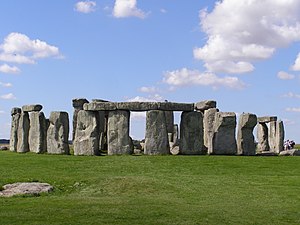

Mr Headstone was recalled from these reveries by a series of animated whispers from Mr Sikes, which were indicative of the fact that they had arrived at the summit on which the ruins stood. Authors of romantic verse know that there is something in the quality of moonlight that lends a grandeur and a glory to even the most commonplace surroundings, but even the poet Ovid - had he stood atop that hill shoulder to shoulder with Mr Headstone and Mr Sikes - would have had difficulty in distinguishing any salient feature of the landscape under the threatening rain clouds. To recover from the mutual dissatisfaction of not being able to see anything, Mr Sikes proposed that they investigate the ancient well, which, he said, was a fascinating early example of Roman aquatic management. Mr Headstone, whose interest in that very topic was indeed very acute, instructed his guide only to lead and he would follow.
They came to a large hole in the ground surrounded by a broken circle of stones, and Mr Sikes, desirous of providing his client with the very best possible service, suggested that if Mr Headstone wished to lean forward to inspect the interior of the well more closely he would gladly stand behind him to prevent any unfortunate occurence that the loose soil around the edge might occasion. Mr Headstone was extremely obliged to Mr Sikes for his trouble, and was on the point of taking up such a position when a tremulous cry from behind a nearby column rooted both men to the spot. The sound also attracted the attention of Bull's Eye, Mr Sikes's terrier, who had been following his master so silently and obediently that his presence had up until this moment escaped our attention. The animal flattened his ears and growled, and Mr Sikes, who seemed capable of discerning some intelligence in the canine's actions, called his dog to heel, and without any further ceremony disappeared into the night.
Mr Headstone was too astonished by his guide's behaviour to do anything other than quake in his boots. Ruins were known to be favoured by ghosts, on account, the pedagogue supposed, of the familiarity of their furnishings. Had they unwittingly disturbed one of the spirits of the place? Perhaps it was a headless Roman centurion, condemned to walk the earth between the hours of sunset and sunrise. Another cry from behind the pillar dispossessed Mr Headstone of this assumption for, as he reasoned with himself, anyone without a head would have difficulty in any form of vocal articulation. The schoolmaster was considering whether or not he should imitate the example of his guide and fly the scene when a figure stepped out from behind the column. At that same moment a rent in the cloudy heavens permitted the beams of the full moon to fall upon the spot and revealed the figure to be none other than that of Mr Augustus Snodgrass, whose presence will be explained in our following communication.
Saturday, January 21, 2012
In Which Mr Headstone Contemplates The History Of His Nation
The county town to which Mr Headstone was bound boasted a proud and ancient lineage, and had, in one way or another, featured in many of the chapters of this island's history. It had once been a garrison for the Romans, who, having settled in Britain without the express invitation of the country's population, often found themselves in need of a fortified residence to allow them to sleep easily in their beds. On the eventual departure of these thin-blooded gentlemen from our shores on account of the poor climate, the region was subject to several centuries of discord and discontent on account of the fact that the various kingdoms into which the country was at that time divided were unable to arrive at any agreement on any subject whatsoever. The town's name was set down for posterity (and an annual demand from the exchequer) in the Doomsday Book by William the Conqueror, who as every schoolboy knows - as well as being the author of that weighty tome - achieved lasting fame in the field of combat by putting out his rival's eye with a sharp stick and winning the Battle of Hastings on the strength of his ocular advantage.
The above facts (if facts they were) - along with numerous anecdotes that involved burnt cakes, butts of malmsey and fallen fruit - comprised the sum total of Mr Headstone's knowledge on the history of his nation, a subject in which he professed to have great interest despite the fact that he was entirely ignorant of its most rudimentary principles. In order to further enrich his knowledge of his island forebears, he determined to take the opportunity afforded by his visit to learn something of the town's past, and with this view in mind engaged a man in a slouched hat whom he found lounging at the coaching station to provide him with a tour of the principal landmarks and areas of historical significance. The man was a stoutly built fellow of about five and thirty, in a black velveteen coat, very soiled drab breeches, lace-up half boots, and grey cotton stockings. Beneath the brim of his hat he disclosed a broad heavy countenance with a beard of three weeks' growth, and two scowling eyes. He answered to the name of Sikes, and had a terrier that answered to the name of Bull's Eye.
Mr Headstone, who prided himself on being an excellent judge of character, was only too willing to take Mr Sikes's standing as a scholar and a man of local learning on that gentleman's own cognisance and, placing half a crown in his outstretched grimy palm, he bade him lead on. It was a singular revelation to Mr Headstone that the history of that ancient town, along whose darker alleys and by-ways they now traversed, should be so inextricably linked with the public taverns of the place. Mr Sikes could not pass an ale house without stopping for refreshment and giving a dramatic account of how the Duke of Such and Such had fallen on this very spot in the execution of some historical business of an indeterminate nature. In his re-enactments of these momentous occasions, Mr Sikes was materially assisted by the encouragement of the other patrons, all of whom seemed to be on familiar terms and were eager to commend their good opinion of him to his client.
As it was approaching midnight and the moon had gone behind the clouds, Mr Sikes proposed a visit to the ruins of the old Roman fort, which was in a secluded place and unlikely to be frequented by any other individuals. To this proposal, Mr Headstone readily assented. What the outcome of their expedition was - if the astute reader has not already anticipated it - will be the subject of our next communication.


The above facts (if facts they were) - along with numerous anecdotes that involved burnt cakes, butts of malmsey and fallen fruit - comprised the sum total of Mr Headstone's knowledge on the history of his nation, a subject in which he professed to have great interest despite the fact that he was entirely ignorant of its most rudimentary principles. In order to further enrich his knowledge of his island forebears, he determined to take the opportunity afforded by his visit to learn something of the town's past, and with this view in mind engaged a man in a slouched hat whom he found lounging at the coaching station to provide him with a tour of the principal landmarks and areas of historical significance. The man was a stoutly built fellow of about five and thirty, in a black velveteen coat, very soiled drab breeches, lace-up half boots, and grey cotton stockings. Beneath the brim of his hat he disclosed a broad heavy countenance with a beard of three weeks' growth, and two scowling eyes. He answered to the name of Sikes, and had a terrier that answered to the name of Bull's Eye.
Mr Headstone, who prided himself on being an excellent judge of character, was only too willing to take Mr Sikes's standing as a scholar and a man of local learning on that gentleman's own cognisance and, placing half a crown in his outstretched grimy palm, he bade him lead on. It was a singular revelation to Mr Headstone that the history of that ancient town, along whose darker alleys and by-ways they now traversed, should be so inextricably linked with the public taverns of the place. Mr Sikes could not pass an ale house without stopping for refreshment and giving a dramatic account of how the Duke of Such and Such had fallen on this very spot in the execution of some historical business of an indeterminate nature. In his re-enactments of these momentous occasions, Mr Sikes was materially assisted by the encouragement of the other patrons, all of whom seemed to be on familiar terms and were eager to commend their good opinion of him to his client.
As it was approaching midnight and the moon had gone behind the clouds, Mr Sikes proposed a visit to the ruins of the old Roman fort, which was in a secluded place and unlikely to be frequented by any other individuals. To this proposal, Mr Headstone readily assented. What the outcome of their expedition was - if the astute reader has not already anticipated it - will be the subject of our next communication.
Friday, January 20, 2012
In Which Mr Headstone Expresses Some Views Of A Literary Nature
Lest the reader should suspect that Mr Headstone had forgotten his aforestated intention to read the entire works of Mr Charles Dickens within the compass of a single year, we feel it incumbent upon ourselves to take this occasion to record some of that gentleman's opinions on the author's inaugural work, which, having been safely stowed in quarto form in one of the pockets of his great coat, was conveniently to hand whenever an occasion for its perusal presented itself during his travels.
Mr Headstone was quickly apprised of the opinion that a book set primarily in the comic mode was perhaps not ideally suited to being read in the confined space of a public conveyance. Whenever Mr Headstone tittered, his fellow passengers frowned; when he sniggered, they raised an eyebrow; when he chuckled, they murmured; when he chortled, they shook their heads - and so, as his own expressions of merriment grew increasingly demonstrative, the individuals around him - deprived of the stimulus of laughter - became sterner and ever more pious. By the time Mr Headstone arrived at the fifth chapter - in which Mr Winkle soothes the refractory steed - he was obliged to cram his pocket handkerchief into his mouth to prevent his fellow passengers from conspiring against him and ejecting him from the coach while it was still in motion. In the latter stages of his journey, the pedagogue was denied recourse to this expediency by virtue of the fact that the article of linen in question had become soaked in his own blood - occasioned by an unfortunate accident with a pocket knife - and he was therefore obliged to bite his knuckles by way of variety.
Mr Headstone was of the opinion that - amusing though many of the incidents recorded within the pages of the book were - he could not quite reconcile them with his own notions of reality. Were not some of the adventures of Mr Pickwick and his fellow members somewhat contrived? And what was the artistic merit of a series of unrelated incidents which seemed designed solely to place the protagonists in positions of embarrassment? These were deep questions, and in order to ruminate upon them Mr Headstone closed his eyes, and very soon was fast asleep.

Mr Headstone was quickly apprised of the opinion that a book set primarily in the comic mode was perhaps not ideally suited to being read in the confined space of a public conveyance. Whenever Mr Headstone tittered, his fellow passengers frowned; when he sniggered, they raised an eyebrow; when he chuckled, they murmured; when he chortled, they shook their heads - and so, as his own expressions of merriment grew increasingly demonstrative, the individuals around him - deprived of the stimulus of laughter - became sterner and ever more pious. By the time Mr Headstone arrived at the fifth chapter - in which Mr Winkle soothes the refractory steed - he was obliged to cram his pocket handkerchief into his mouth to prevent his fellow passengers from conspiring against him and ejecting him from the coach while it was still in motion. In the latter stages of his journey, the pedagogue was denied recourse to this expediency by virtue of the fact that the article of linen in question had become soaked in his own blood - occasioned by an unfortunate accident with a pocket knife - and he was therefore obliged to bite his knuckles by way of variety.

Mr Headstone was of the opinion that - amusing though many of the incidents recorded within the pages of the book were - he could not quite reconcile them with his own notions of reality. Were not some of the adventures of Mr Pickwick and his fellow members somewhat contrived? And what was the artistic merit of a series of unrelated incidents which seemed designed solely to place the protagonists in positions of embarrassment? These were deep questions, and in order to ruminate upon them Mr Headstone closed his eyes, and very soon was fast asleep.
Thursday, January 19, 2012
In Which Mr Headstone Travels North
Having acquitted himself of his filial duty and, moreover, finding his mother's larder - like the one in the nursery rhyme - to be rather bare, Mr Headstone resolved to leave behind the home of his childhood and once again shoulder the burden of life. In a touching display of concern his aged parents stood abreast on the threshold of their humble cottage and watched as their son made his way along the road. Only when his increasingly diminutive figure had finally disappeared over a hill on the horizon did they avert their gaze and close and bolt the door. Mr Headstone, too, had been greatly affected by the emotion engendered by their parting, and anyone passing him on the road could not have failed to notice the melancholy manner in which he swung his carpet bag at his side and whistled a touching ditty of country life.
Arriving at the staging post an hour before the coach, Mr Headstone made himself comfortable by the side of the road (or as comfortable as he could with only a milestone for a cushion) and proceeded to while away the time by whittling on a stick of ash with his pocket knife. This enterprise might well have afforded him sufficient entertainment had he applied himself to the task with a little less vigour. As it was, his determined stokes of the blade succeeded not only in stripping the ash of its bark, but also his thumb of its skin.
Mr Headstone could at least take some small comfort from the fact that his reaction to his own misfortune (which, to the disinterested observer, took the form of a primitive dance accompanied by the declension of some choice words of Saxon origin) left the approaching coachman in no doubt that here was another traveller flagging down his vehicle. Once aboard, Mr Headstone was able to staunch the flow of blood from his throbbing digit with a white handkerchief that all too swiftly became incarnadined with a fluid he would rather have remained an internal feature of his anatomy.
As they travelled north Mr Headstone roused himself sufficiently to look out of the window. The landscape had changed materially: gone were the gently rolling pastures, the well-tended farms, the neat villages of honeyed limestone and the trimmed hedgerows; in their place were straggling cottages by the roadside, paths of cinder and brick dust, the deep red glow of furnace fires in the distance, and volumes of dense smoke issuing heavily forth from high toppling chimneys, blackening and obscuring everything around. On contemplating the scene, Mr Headstone was inclined to agree with the common opinion of gentlemen of refinement that the north of the country was unquestionably and unrelentingly grim.
Arriving at the staging post an hour before the coach, Mr Headstone made himself comfortable by the side of the road (or as comfortable as he could with only a milestone for a cushion) and proceeded to while away the time by whittling on a stick of ash with his pocket knife. This enterprise might well have afforded him sufficient entertainment had he applied himself to the task with a little less vigour. As it was, his determined stokes of the blade succeeded not only in stripping the ash of its bark, but also his thumb of its skin.
Mr Headstone could at least take some small comfort from the fact that his reaction to his own misfortune (which, to the disinterested observer, took the form of a primitive dance accompanied by the declension of some choice words of Saxon origin) left the approaching coachman in no doubt that here was another traveller flagging down his vehicle. Once aboard, Mr Headstone was able to staunch the flow of blood from his throbbing digit with a white handkerchief that all too swiftly became incarnadined with a fluid he would rather have remained an internal feature of his anatomy.
As they travelled north Mr Headstone roused himself sufficiently to look out of the window. The landscape had changed materially: gone were the gently rolling pastures, the well-tended farms, the neat villages of honeyed limestone and the trimmed hedgerows; in their place were straggling cottages by the roadside, paths of cinder and brick dust, the deep red glow of furnace fires in the distance, and volumes of dense smoke issuing heavily forth from high toppling chimneys, blackening and obscuring everything around. On contemplating the scene, Mr Headstone was inclined to agree with the common opinion of gentlemen of refinement that the north of the country was unquestionably and unrelentingly grim.
Wednesday, January 18, 2012
In Which Mr Headstone Visits A House of Public Entertainment
The land around the town of Mr Headstone's birth - which we will call Avondale, though that is not its true name - was once planted with a profusion of sturdy English oak trees. In days of yore it was the favourite hunting ground of the king, and so it had bestowed upon it the noble title of forest - thereby conveniently granting the monarch the sole rights of possession to all the produce of the land. No doubt this royal prerogative would have remained until this day had not subsequent royal personages found themselves in need of funds to swell the royal coffers; these coffers being much depleted by royal notions of extravagance that required a steady supply of ermine gowns, golden sceptres and satin cushions, which were then believed (and perhaps still are) to be the everyday necessities of a royal existence. And so, piece by piece, acre by acre, the forest was sold to enterprising gentleman, who, tree by tree, acre by acre, cut it down for the purposes of husbandry.
Had Mr Headstone paused to view the much changed landscape on the Sunday morning he set out in the direction of a neighbouring village for The Red Lion, he might have had occasion to mourn its passing and consider how transient is the existence of man. However, it can be reported with a degree of both conviction and confidence that no legal mind could hope to challenge even in the highest court of the land, that no such melancholy reflections crossed the schoolmaster's mind. Indeed, as he followed the winding footpath through a coppice of elm and ash, his thoughts were centered not in that seat of learning but, lower down, in the region of his stomach, which, being empty (like his mind) was inclined to promote concentration on one subject alone - that being the prospect of a hearty meal.
The Red Lion was a house of public entertainment, or what ordinary people would designate a public house; which fact was demonstrated to all travellers as could neither read nor write by an emblem of that noble crimson creature suspended above the doorway. In common with many such establishments, the landlord of this tavern had elected to name it after a beast never before seen in nature in that particular hue as if a more commonplace association of colour and quadruped - such as The Brown Horse, or The Piebald Cow - would have a less efficacious effect on attracting passing trade.
This particular 'pub' - to give it the common name - was renowned the country round for its hearty English vitals, and Mr Headstone had tramped five miles to work up an appetite that would be equal to its epicurean reputation. When presented with the bill of fare, the schoolmaster was thrown into the immediate quandary that will be familiar to any discriminating gourmand. Should he plump for the roast duck, or the side of beef, or the saddle of lamb? Would it be an extravagance to order all three? After much indecision and procrastination - as dangerous in company as tow and flame - Mr Headstone decided upon the duck. The waiter congratulated him on his choice of repast and, bowing obsequiously, backed away from the table, narrowly avoiding an entanglement with a small dog that seemed to have the run of the floor.
No sooner had the waiter retired with the order than the pedagogue recalled that the meat of a duck was inclined to be fatty, and, in a voice more modulated for the acoustical dimensions of a ship maker's yard than the interior of a small public house, revoked his claim on the fowl. The waiter - still bobbing like a cork on water - took up his post at the table and waited with divine patience as Mr Headstone ruminated, an operation which appeared to require the repetition of the entire bill of fare in a low voice as if it were a kind of catechism. He decided upon the beef. The waiter congratulated him again and retired, one eye of his bobbing head keeping a look-out for the vivacious pup.
As soon as the waiter had left his side, Mr Headstone was racked with doubt. What if the beef were underdone? Or overdone? It would not do. No sailor atop the highest mast of a stricken barque could on sighting land have raised his voice to that pitch of excitement with which the pedagogue denounced the beef. The waiter returned, and, after the manner of his calling, waited. Mr Headstone decided on the lamb. He was congratulated on his choice and furthermore commended not to subject it to any further variation.
When the groaning platter was brought to the table, piled high with slabs of meat, green beans and steaming roast potatoes, Mr Headstone wasted no time in affixing a white napkin under his chin. Setting his arms akimbo in a position appropriate to the action of doing full justice to his repast, he pierced the largest roast potato with his fork and stuffed it whole into his mouth. This manner of proceeding was entirely natural for a hungry man and would have occasioned no reason for comment had it not been for the temperature of the aforesaid vegetable. A common appreciation of the physical laws that govern the universe tells us that any solid object that attains a significant temperature is likely to be hotter on the inside than the outside. Certain it was that, had Mr Headstone been ignorant of this common piece of knowledge beforehand, he was quickly apprised of its veracity at the moment he began to chew. It was fortunate that the waiter had placed at his elbow a jug of liquid and with this he sought to quench the burning sensation in his throat. It was, however, unfortunate that the liquid in question was a pint of mint sauce, made with the principal compound of malt vinegar.
Had Mr Headstone paused to view the much changed landscape on the Sunday morning he set out in the direction of a neighbouring village for The Red Lion, he might have had occasion to mourn its passing and consider how transient is the existence of man. However, it can be reported with a degree of both conviction and confidence that no legal mind could hope to challenge even in the highest court of the land, that no such melancholy reflections crossed the schoolmaster's mind. Indeed, as he followed the winding footpath through a coppice of elm and ash, his thoughts were centered not in that seat of learning but, lower down, in the region of his stomach, which, being empty (like his mind) was inclined to promote concentration on one subject alone - that being the prospect of a hearty meal.
The Red Lion was a house of public entertainment, or what ordinary people would designate a public house; which fact was demonstrated to all travellers as could neither read nor write by an emblem of that noble crimson creature suspended above the doorway. In common with many such establishments, the landlord of this tavern had elected to name it after a beast never before seen in nature in that particular hue as if a more commonplace association of colour and quadruped - such as The Brown Horse, or The Piebald Cow - would have a less efficacious effect on attracting passing trade.

This particular 'pub' - to give it the common name - was renowned the country round for its hearty English vitals, and Mr Headstone had tramped five miles to work up an appetite that would be equal to its epicurean reputation. When presented with the bill of fare, the schoolmaster was thrown into the immediate quandary that will be familiar to any discriminating gourmand. Should he plump for the roast duck, or the side of beef, or the saddle of lamb? Would it be an extravagance to order all three? After much indecision and procrastination - as dangerous in company as tow and flame - Mr Headstone decided upon the duck. The waiter congratulated him on his choice of repast and, bowing obsequiously, backed away from the table, narrowly avoiding an entanglement with a small dog that seemed to have the run of the floor.
No sooner had the waiter retired with the order than the pedagogue recalled that the meat of a duck was inclined to be fatty, and, in a voice more modulated for the acoustical dimensions of a ship maker's yard than the interior of a small public house, revoked his claim on the fowl. The waiter - still bobbing like a cork on water - took up his post at the table and waited with divine patience as Mr Headstone ruminated, an operation which appeared to require the repetition of the entire bill of fare in a low voice as if it were a kind of catechism. He decided upon the beef. The waiter congratulated him again and retired, one eye of his bobbing head keeping a look-out for the vivacious pup.
As soon as the waiter had left his side, Mr Headstone was racked with doubt. What if the beef were underdone? Or overdone? It would not do. No sailor atop the highest mast of a stricken barque could on sighting land have raised his voice to that pitch of excitement with which the pedagogue denounced the beef. The waiter returned, and, after the manner of his calling, waited. Mr Headstone decided on the lamb. He was congratulated on his choice and furthermore commended not to subject it to any further variation.
When the groaning platter was brought to the table, piled high with slabs of meat, green beans and steaming roast potatoes, Mr Headstone wasted no time in affixing a white napkin under his chin. Setting his arms akimbo in a position appropriate to the action of doing full justice to his repast, he pierced the largest roast potato with his fork and stuffed it whole into his mouth. This manner of proceeding was entirely natural for a hungry man and would have occasioned no reason for comment had it not been for the temperature of the aforesaid vegetable. A common appreciation of the physical laws that govern the universe tells us that any solid object that attains a significant temperature is likely to be hotter on the inside than the outside. Certain it was that, had Mr Headstone been ignorant of this common piece of knowledge beforehand, he was quickly apprised of its veracity at the moment he began to chew. It was fortunate that the waiter had placed at his elbow a jug of liquid and with this he sought to quench the burning sensation in his throat. It was, however, unfortunate that the liquid in question was a pint of mint sauce, made with the principal compound of malt vinegar.
Tuesday, January 17, 2012
In Which Mr Headstone Revisits The Scenes Of His Youth
Finding himself temporarily at liberty before affairs of a pressing nature required his presence in the north of the country, Mr Headstone took advantage of the occasion to visit the town of his birth and pay his respects to his aged parents, who - still hale and hearty despite their advancing years - enjoyed the robust pleasures of country living. Accordingly, the school master descended from the coach at the noon staging post and - charting his course by the distant church spire just as a mariner finds a guide in the north star - set out across the fields.
Anyone who has returned to the scene of their childhood after an absence of many years cannot help but grow sentimental at the sight of familiar landmarks, which, by their very association with the jumbled memories of the past, recall to mind the adventures of youth. So it was with Mr Headstone as he approached the town. Here was the stile from which he had fallen into the hawthorn hedge - there was the field across which he had been pursued by an angry bull - here the weir in which he had almost drowned - there the apple tree from whose highest branch he had plummeted without ceremony into a forest of stinging nettles. He passed by the draper's yard, where once a black dog - like Cerberus - had terrorised any individual foolhardy enough to stray within the compass of the chain that attached the beast to its kennel. Outside The Rose and Crown he stopped to gaze upon the horse trough in which the town roughs had regularly demonstrated to him the difficulties commonly encountered in respiration when one is immersed head first into water. He stood on the very corner where the beadle had struck him on the head with the staff of his office in the mistaken belief that repeated blows with a hard object would assist in his education.
Is it any wonder, with so many memories flooding the banks of his soul, that Mr Headstone should be overcome with emotion? Should we wonder then that on gaining the hearth and home of his aged parents, Mr Headstone should - after performing the appropriate filial salutations - make a line directly for the kitchen cupboard where from past experience he knew there to be a bottle of cooking sherry? Let us simply observe that at times we are masters of our emotions, and at other times our emotions are masters of us.
Anyone who has returned to the scene of their childhood after an absence of many years cannot help but grow sentimental at the sight of familiar landmarks, which, by their very association with the jumbled memories of the past, recall to mind the adventures of youth. So it was with Mr Headstone as he approached the town. Here was the stile from which he had fallen into the hawthorn hedge - there was the field across which he had been pursued by an angry bull - here the weir in which he had almost drowned - there the apple tree from whose highest branch he had plummeted without ceremony into a forest of stinging nettles. He passed by the draper's yard, where once a black dog - like Cerberus - had terrorised any individual foolhardy enough to stray within the compass of the chain that attached the beast to its kennel. Outside The Rose and Crown he stopped to gaze upon the horse trough in which the town roughs had regularly demonstrated to him the difficulties commonly encountered in respiration when one is immersed head first into water. He stood on the very corner where the beadle had struck him on the head with the staff of his office in the mistaken belief that repeated blows with a hard object would assist in his education.
Is it any wonder, with so many memories flooding the banks of his soul, that Mr Headstone should be overcome with emotion? Should we wonder then that on gaining the hearth and home of his aged parents, Mr Headstone should - after performing the appropriate filial salutations - make a line directly for the kitchen cupboard where from past experience he knew there to be a bottle of cooking sherry? Let us simply observe that at times we are masters of our emotions, and at other times our emotions are masters of us.
Monday, January 16, 2012
In Which Mr Headstone Incurs The Wrath Of The Coachman
Having returned to the familiar surroundings of his humble lodgings after a sojourn of some nine days, Mr Headstone is inclined to look back on the incidents of the week with those conflicting emotions of regret and relief that are often the lot of the reluctant traveller.
Soaked by an icy rain, almost steamed alive by an excessive application of heat from a well-banked fire and then doused with a bowl of cold slops, Mr Headstone found insult being added to injury (in the most literal sense of the phrase) when the coach driver burst into the parlour and began to chastise him for delaying the departure of The Tally Ho - this hunting cry being the appellation ascribed to the four-in-hand that was to transport those individuals set down on the way bill to their destination in the north of the country.
The clock showed a quarter to eight, and at a quarter to eight every morning - in frost and in snow, in wind and in rain, in sun and in shade - The Tally Ho rolled out of the yard, passed under the stone arch and joined the great thoroughfare of life, where it became an immediate danger to any pedestrian who might be inclined to cross the street with the intention of attaining the other side. Aided by the application of a secure purchase to the collar of the gentleman's jacket and the waistband of his trowsers, the driver escorted Mr Headstone to his seat with the greatest expediency, an operation that was achieved at some little discomfort to the other passengers. With a cry and a crack of the lash, the coach driver urged the four chestnut bays forward and - exhibiting a dexterity that demanded nothing less than admiration or something more than incredulity - this worthy whip managed to perform a full revolution of both steeds and carriage whilst holding the reins in one hand and the neck of a black bottle in the other.
Whether it was the precipitous manner in which he had been introduced to the company that discouraged his fellow passengers from essaying polite conversation or whether it was the unpleasant fug created by the damp worsted of his garments within the confined space of the interior, Mr Headstone could not accurately determine. Howsoever it was, he was not to be discouraged by the scowls of the commercial man who sat opposite him nor by the frequent jabs in the ribs he received from the stout gentleman beside him whenever the coach negotiated an uneven stretch of the highway.
When a traveller is denied the casual discourse that passes for entertainment between strangers on a long journey, he must fall upon his own resources to while away the time. This he may do by admiring the scenery that passes before him and remarking inwardly on the variety of life thereby exhibited. If he is in an imaginative frame of mind, he might indulge in some flights of fancy regarding the histories of his fellow passengers and so figuratively peep into the great chapbook of humanity. If the notion takes him, he might wax poetical and compose some lines in his head (to be later copied down for posterity) regarding that great journey on which we have all embarked. Or, alternatively, he might, like Mr Headstone, make a pillow out of his hat and go to sleep.
Soaked by an icy rain, almost steamed alive by an excessive application of heat from a well-banked fire and then doused with a bowl of cold slops, Mr Headstone found insult being added to injury (in the most literal sense of the phrase) when the coach driver burst into the parlour and began to chastise him for delaying the departure of The Tally Ho - this hunting cry being the appellation ascribed to the four-in-hand that was to transport those individuals set down on the way bill to their destination in the north of the country.
The clock showed a quarter to eight, and at a quarter to eight every morning - in frost and in snow, in wind and in rain, in sun and in shade - The Tally Ho rolled out of the yard, passed under the stone arch and joined the great thoroughfare of life, where it became an immediate danger to any pedestrian who might be inclined to cross the street with the intention of attaining the other side. Aided by the application of a secure purchase to the collar of the gentleman's jacket and the waistband of his trowsers, the driver escorted Mr Headstone to his seat with the greatest expediency, an operation that was achieved at some little discomfort to the other passengers. With a cry and a crack of the lash, the coach driver urged the four chestnut bays forward and - exhibiting a dexterity that demanded nothing less than admiration or something more than incredulity - this worthy whip managed to perform a full revolution of both steeds and carriage whilst holding the reins in one hand and the neck of a black bottle in the other.
Whether it was the precipitous manner in which he had been introduced to the company that discouraged his fellow passengers from essaying polite conversation or whether it was the unpleasant fug created by the damp worsted of his garments within the confined space of the interior, Mr Headstone could not accurately determine. Howsoever it was, he was not to be discouraged by the scowls of the commercial man who sat opposite him nor by the frequent jabs in the ribs he received from the stout gentleman beside him whenever the coach negotiated an uneven stretch of the highway.
When a traveller is denied the casual discourse that passes for entertainment between strangers on a long journey, he must fall upon his own resources to while away the time. This he may do by admiring the scenery that passes before him and remarking inwardly on the variety of life thereby exhibited. If he is in an imaginative frame of mind, he might indulge in some flights of fancy regarding the histories of his fellow passengers and so figuratively peep into the great chapbook of humanity. If the notion takes him, he might wax poetical and compose some lines in his head (to be later copied down for posterity) regarding that great journey on which we have all embarked. Or, alternatively, he might, like Mr Headstone, make a pillow out of his hat and go to sleep.
Sunday, January 8, 2012
In Which Mr Headstone Wavers In His Resolution
A wise and venerable Oriental philosopher, who - according to legend - enjoyed more lives than those commonly ascribed to a domestic cat and was said to have exhibited the outward manifestations of wisdom in the form of a long grey beard and fleshy earlobes whilst still in the cradle, once proclaimed that even a journey of a thousand miles begins with a single step. Had Mr Headstone been familiar with the writings of this excellent gentleman, he no doubt would have concurred with the veracity of the statement. It was, after all, an indisputable fact that, in order to gain the coaching station at The Saracen's Head, he was at first obliged to traverse a significant distance on foot. This expedition was made less arduous by the prematurity of the hour, which precluded the presence upon the streets of the city's citizenry - all of whom were still snugly abed - , and allowed Mr Headstone full range of the thoroughfares along which he passed. Regrettably, his progress was in no small degree hampered by an icy wind, which pricked him with sharp particles of frozen precipitation, and seemed determined to blow in a perversely contrary direction to the one upon which he was set.
Mr Headstone could, at least, take some comfort from the fact that he had exhibited enough presence of mind to reserve a seat on the inside of the coach. Before any observers seek to object to such an extravagance, they would do well to consider the effects a wintery gale can have on an individual's constitution when he is being propelled into it with all the speed that a coach and four can muster. By the time Mr Headstone arrived at the yard of the inn, preparations for the departure of the coach were in full swing, but there was still enough time for the school master to take a bowl of warm milk fortified with a tot of rum. Although the addition of an alcoholic supplement was in strict contradiction to Mr Headstone's resolution to forgo strong drink, he reasoned that the circumstances of the occasion were such that an exception could (and should) be made, and, having convinced himself of the wisdom of his own argument, he ordered a double measure just to be sure.
With a view to preserving his own comfort for the journey ahead, Mr Headstone occupied a place in front of the parlour fire in an attempt to remove the excess mositure from his garments.The operation of the heat from the coals on the worsted material of his jacket and pantaloons did not, however, have the effect he had hoped for. The seat of his breeches, which he had placed in close proximity to the glowing hearth in order to benefit from the full force of the reddish flames, became at once uncomfortably warm and then painfully hot. His jacket began to steam like a kettle on the hob and his startled countenance became wreathed in plumes of scalding vapour. Mr Headstone was in very really danger of being broiled alive, and, had it not been for the precipitous action of a passing chambermaid, who doused him with a bowl of cold slops which she had been intending to throw out into the yard, the pedagogue might have suffered greatly - for which deliverance he should be eternally grateful to the quick-wittedness of that humble servant.
Mr Headstone could, at least, take some comfort from the fact that he had exhibited enough presence of mind to reserve a seat on the inside of the coach. Before any observers seek to object to such an extravagance, they would do well to consider the effects a wintery gale can have on an individual's constitution when he is being propelled into it with all the speed that a coach and four can muster. By the time Mr Headstone arrived at the yard of the inn, preparations for the departure of the coach were in full swing, but there was still enough time for the school master to take a bowl of warm milk fortified with a tot of rum. Although the addition of an alcoholic supplement was in strict contradiction to Mr Headstone's resolution to forgo strong drink, he reasoned that the circumstances of the occasion were such that an exception could (and should) be made, and, having convinced himself of the wisdom of his own argument, he ordered a double measure just to be sure.
With a view to preserving his own comfort for the journey ahead, Mr Headstone occupied a place in front of the parlour fire in an attempt to remove the excess mositure from his garments.The operation of the heat from the coals on the worsted material of his jacket and pantaloons did not, however, have the effect he had hoped for. The seat of his breeches, which he had placed in close proximity to the glowing hearth in order to benefit from the full force of the reddish flames, became at once uncomfortably warm and then painfully hot. His jacket began to steam like a kettle on the hob and his startled countenance became wreathed in plumes of scalding vapour. Mr Headstone was in very really danger of being broiled alive, and, had it not been for the precipitous action of a passing chambermaid, who doused him with a bowl of cold slops which she had been intending to throw out into the yard, the pedagogue might have suffered greatly - for which deliverance he should be eternally grateful to the quick-wittedness of that humble servant.
Thursday, January 5, 2012
In Which Mr Headstone Makes Preparations For A Journey
Returning to his lodgings after his misadventure in the gin palace, Mr Headstone measured the length of his aching frame - battered and bruised from the unwonted attentions of two dozen pairs of boot caps - on the fusty linen of his unmade bed and spent the remainder of the day in the contemplation of a damp patch in a corner of the ceiling. At five o'clock there was a knock on the door and the grinning visage of Simon Tappertit appeared from around the same like a head in the phantasmagoria to announce that Mr Headstone's company was desired at The George and Vulture without any further delay. To the consternation of Mr Tappertit and the subsequent incredulity of Mr Guppy and Mr Snodgrass to whom the information was relayed with immediate dispatch, Mr Headstone announced his resolution to forsake all strong liquor for the remainder of his natural life, or (failing that resolution) at least up until that moment his patriotic duty would oblige him to drink a toast to the monarch. There having been no public holidays in the intervening forty-eight hours, Mr Headstone has remained true to his word, despite a tendency to chew his bottom lip in an overly aggressive manner whenever the matter of liquid refreshment is mentioned in his company.
Given the parlous state of his constitution, which his medical man will attest has never been of the most robust kind, it is questionable whether Mr Headstone should be considering a journey of any greater distance than one that would take him to the chemist's shop on the corner. The plain fact of the matter is, however, that important affairs of business call him away for a period of nine days, and he must endure the discomfort of various forms of public conveyance if he is to put those affairs into order.
As any intrepid traveller knows, the first stage of a journey is the preparation of a portmanteau. The manner in which a person executes this task may be taken as a fairly reliable indication of their ability to adapt to the ever changing circumstances of life on the open road. Regrettably, Mr Headstone was in his approach to the simple act of packing - as in so many other things in life - of a rather indecisive nature. He would inevitably begin with resolve and determination by stuffing the entire contents of his meagre wardrobe into a carpet bag. However, as soon as the operation was complete, he would begin to wonder whether his second best waistcoat was indeed a necessary requirement, and - on deciding that it was not - would rummage around until he found it, displacing all the other garments to such a degree that he was obliged to initiate the entire process from the beginning.
If his absence was to be of any great length of time, Mr Headstone was inclined to include a number of personal items amongst his luggage. There was, for example, the stuffed perch in a glass case, which normally hung over the mantel, and which was of some sentimental value to the school master on account of the fact that he had won it at a game of cards. Other items, some of a more practical nature, included a cast iron skillet, a globe, a hurdy-gurdy, and a portrait of the Prince Regent. Inevitably, the inclusion of any of these items required the sacrifice of certain articles of clothing in order to make room in his carrying case. As sentiment was a governing feature of Mr Headstone's character (particularly when he was under the influence of Old Tom), it was not unusual for him to find himself in a hotel room comtemplating an example of piscine taxidermy whilst regretting the fact that he had elected not to pack a change of undergarments.
As Mr Headstone's journey is to last for more than a week and will take him to the northern extremities of the country, we may expect a variety of picaresque incidents to ensue, and we would like to ensure our readers that they will be faithfully reported in subsequent pages.

Given the parlous state of his constitution, which his medical man will attest has never been of the most robust kind, it is questionable whether Mr Headstone should be considering a journey of any greater distance than one that would take him to the chemist's shop on the corner. The plain fact of the matter is, however, that important affairs of business call him away for a period of nine days, and he must endure the discomfort of various forms of public conveyance if he is to put those affairs into order.
As any intrepid traveller knows, the first stage of a journey is the preparation of a portmanteau. The manner in which a person executes this task may be taken as a fairly reliable indication of their ability to adapt to the ever changing circumstances of life on the open road. Regrettably, Mr Headstone was in his approach to the simple act of packing - as in so many other things in life - of a rather indecisive nature. He would inevitably begin with resolve and determination by stuffing the entire contents of his meagre wardrobe into a carpet bag. However, as soon as the operation was complete, he would begin to wonder whether his second best waistcoat was indeed a necessary requirement, and - on deciding that it was not - would rummage around until he found it, displacing all the other garments to such a degree that he was obliged to initiate the entire process from the beginning.
If his absence was to be of any great length of time, Mr Headstone was inclined to include a number of personal items amongst his luggage. There was, for example, the stuffed perch in a glass case, which normally hung over the mantel, and which was of some sentimental value to the school master on account of the fact that he had won it at a game of cards. Other items, some of a more practical nature, included a cast iron skillet, a globe, a hurdy-gurdy, and a portrait of the Prince Regent. Inevitably, the inclusion of any of these items required the sacrifice of certain articles of clothing in order to make room in his carrying case. As sentiment was a governing feature of Mr Headstone's character (particularly when he was under the influence of Old Tom), it was not unusual for him to find himself in a hotel room comtemplating an example of piscine taxidermy whilst regretting the fact that he had elected not to pack a change of undergarments.
As Mr Headstone's journey is to last for more than a week and will take him to the northern extremities of the country, we may expect a variety of picaresque incidents to ensue, and we would like to ensure our readers that they will be faithfully reported in subsequent pages.
Wednesday, January 4, 2012
In Which Mr Headstone Takes A Tonic
Having partaken of a quantity of fresh air liberally mixed with a generous portion of soot and the pungent vapours given off by the thickened water in the gutters, Mr Headstone deemed it necessary to clear his lungs with a tonic of his own particular prescription. Had he been a man of even the most limited education in the field of biology, the pedagogue would have known that liquids entering the body through the mouth and traversing the channel of the throat have never been observed to decant into the organs of respiration, and so cannot by the strict rules that govern the art of medicine be said to have any effect whatsoever on the action of inhalation. To such a Hippocratic objection, Mr Headstone would remain steadfast in his belief that the successful application of his remedy on numerous occasions was tantamount to scientific proof of the tonic's efficacy.
This tonic, which had once been dispensed by the apothecary, was now more conveniently available over the bar of that dazzling emporium of alcohol beverages commonly known as the 'gin shop'. Finding himself walking up Holborn Hill (the very phrase being enough to provoke a thirst in a normal man and a craving in a thirsty one), Mr Headstone determined to turn in at the establishment of Mr Thompson and Mr Fearon and to put himself right with one of their special compounds. The hour being early, there were but few customers engaged in the act of taking physic in liquid form, and the schoolmaster was able to secure with ease his favoured position at the polished mahogany bar that ran the width of the interior. Upon consultation with one of the practioners who dispensed both liquor and advice from behind the counter, Mr Headstone accepted a glass of rum shrub, followed in swift succession by a sherry cobbler, a pint of champagne and a quartern of Old Tom.
Thus revived, he fell to a perusal of The Pickwick Papers, which he had managed - after some confusion over a lump of coal - to retrieve from his pocket. He made very little progress in understanding any of the author's intentions until a young fellow in a brown coat with bright buttons observed - by way of a ribald remark to his two companions - that the book was upside down. Having revolved the volume through an appropriate angle of declination, Mr Headstone reapplied himself to the task of reading the first sentence for the twenty-third time. This he completed to his satisfaction and, pocketing the volume once more, resolved to engage with the second sentence at the earliest possible opportunity.
As has already been observed, Mr Headstone was inclined to display the sentimental side of his nature when the influence of strong liquor was upon him. It was, undoubtedly, this feeling of compassion for his fellow man that spurred him on to an act of generosity which - on sober reflection - it might have been more prudent to withhold. Having observed the few poor individuals about him - the two washerwomen seated on a bench sharing a glass of gin and peppermint, the old men complaining of the hardness of the times to a plump elderly lady reeking of rum, even the caustic fellow in the brown coat and his two fawning companions - Mr Headstone felt a sudden urge of philanthropy overtake his soul, and, striking the polished mahogany with the palm of his hand, announced in a voice both stentorian and compassionate that he would stand a glass round for the entire company.
It was an unfortunate circumstance that - only moments prior to this proclamation and unbeknownst to its proclaimer - a knot of Irish labourers had entered the shop from the street. Upon being greeted with such a welcome they crowded as a man to the bar, knocking Mr Headstone from his stool in their eagerness to avail themselves of this uncommon example of English hospitality. On hands and knees, the pedagogue crawled tortoise-like between the forest of their sturdy legs and, finally extricating himself from the outlying members of the group, who were too busy assaulting those immediately in front of them to notice anything untoward about their boots, he was able to affect as dignified an exit as the circumstances would allow before the police arrived. With one last backward glance at the confused mixture of arms, legs, staves, torn coats, shouting and struggling, Mr Headstone reflected with some degree of sorrow that he would not be able to return to the establishment for some time without the fear of being presented with a very large bill.
This tonic, which had once been dispensed by the apothecary, was now more conveniently available over the bar of that dazzling emporium of alcohol beverages commonly known as the 'gin shop'. Finding himself walking up Holborn Hill (the very phrase being enough to provoke a thirst in a normal man and a craving in a thirsty one), Mr Headstone determined to turn in at the establishment of Mr Thompson and Mr Fearon and to put himself right with one of their special compounds. The hour being early, there were but few customers engaged in the act of taking physic in liquid form, and the schoolmaster was able to secure with ease his favoured position at the polished mahogany bar that ran the width of the interior. Upon consultation with one of the practioners who dispensed both liquor and advice from behind the counter, Mr Headstone accepted a glass of rum shrub, followed in swift succession by a sherry cobbler, a pint of champagne and a quartern of Old Tom.
Thus revived, he fell to a perusal of The Pickwick Papers, which he had managed - after some confusion over a lump of coal - to retrieve from his pocket. He made very little progress in understanding any of the author's intentions until a young fellow in a brown coat with bright buttons observed - by way of a ribald remark to his two companions - that the book was upside down. Having revolved the volume through an appropriate angle of declination, Mr Headstone reapplied himself to the task of reading the first sentence for the twenty-third time. This he completed to his satisfaction and, pocketing the volume once more, resolved to engage with the second sentence at the earliest possible opportunity.
As has already been observed, Mr Headstone was inclined to display the sentimental side of his nature when the influence of strong liquor was upon him. It was, undoubtedly, this feeling of compassion for his fellow man that spurred him on to an act of generosity which - on sober reflection - it might have been more prudent to withhold. Having observed the few poor individuals about him - the two washerwomen seated on a bench sharing a glass of gin and peppermint, the old men complaining of the hardness of the times to a plump elderly lady reeking of rum, even the caustic fellow in the brown coat and his two fawning companions - Mr Headstone felt a sudden urge of philanthropy overtake his soul, and, striking the polished mahogany with the palm of his hand, announced in a voice both stentorian and compassionate that he would stand a glass round for the entire company.
It was an unfortunate circumstance that - only moments prior to this proclamation and unbeknownst to its proclaimer - a knot of Irish labourers had entered the shop from the street. Upon being greeted with such a welcome they crowded as a man to the bar, knocking Mr Headstone from his stool in their eagerness to avail themselves of this uncommon example of English hospitality. On hands and knees, the pedagogue crawled tortoise-like between the forest of their sturdy legs and, finally extricating himself from the outlying members of the group, who were too busy assaulting those immediately in front of them to notice anything untoward about their boots, he was able to affect as dignified an exit as the circumstances would allow before the police arrived. With one last backward glance at the confused mixture of arms, legs, staves, torn coats, shouting and struggling, Mr Headstone reflected with some degree of sorrow that he would not be able to return to the establishment for some time without the fear of being presented with a very large bill.
Tuesday, January 3, 2012
In Which Mr Headstone Determines To Take Some Air
Having spent much of the sabbath day in the observance of that Biblical precept laid down in the Book of Genesis, Mr Headstone determined to be up betimes on Monday morning and venture out into the neighbouring streets to observe that portion of humanity which chance and circumstance had thrown into his immediate orbit. True to his word, he unfolded his limbs from the tangled nest of his bedclothes before the cockerel had had a chance to crow - not that that noble clarion of the dawn had ever been heard within the murky precincts in which Mr Headstone resided - and busied himself with the application of that most essential element of a gentleman's toilette - that is to say, a shave.
Mr Headstone might for the price of a penny have availed himself of a very close shave from a barber in Fleet Street, whose reputation with a blade was much admired. However, as the schoolmaster was a man of a frugal disposition and never chose to pay for a service that he could effect himself without the necessity of a fee, he was in the habit of trimming his own whiskers. With this operation in mind, he prepared a bowl of lather, ran a straight razor over an old army belt that doubled for a strop, and greeted his lean and lank visage in the cracked shard of broken glass that served as his shaving mirror.
Who can say whether it was the dullness of the steel (made duller perhaps by the softened leather of the bandolier), or the stiffness of the bristles on the gentleman's chin; or whether it was the deceitful reflection presented by the fractured glass, or the unsteady motion with which the blade was applied to the cheek; or whether it was the result of all these circumstances working in concert? Whatever the root cause of the calamity, it was an undeniable fact that Mr Headstone was incapable of shaving himself without drawing a copious quantity of blood in the process. In an effort to staunch the flow and prevent the pallor of his complexion from becoming so severe that it might startle passers-by, the pedagogue applied screws of paper soaked in gin to the wounds he inflicted upon himself. Although this method might be judged effective as a prophylactic, it could not in any sense be considered a means of enhancing the gentleman's appearance. It is fortunate, therefore, that Mr Headstone, being on equitable terms with his own reflection, did not take any offence at the image that stared back at him out of the glass.
Having dressed and breakfasted, Mr Headstone was ready for the world even if the world was not quite ready for him. In an effort to determine the prevailing meteorological conditions, he stuck his head out of the window and, by performing a movement more common to a tapster's corkscrew than the human frame, was able to discern a patch of azure sky between the gables and the sooty chimney tops. Abjuring the need for an umbrella, Mr Headstone pulled on his great coat, put his copy of The Pickwick Papers in one pocket and - for the purpose of balance - a lump of coal in the other, and set forth on his peregrination.
Mr Headstone might for the price of a penny have availed himself of a very close shave from a barber in Fleet Street, whose reputation with a blade was much admired. However, as the schoolmaster was a man of a frugal disposition and never chose to pay for a service that he could effect himself without the necessity of a fee, he was in the habit of trimming his own whiskers. With this operation in mind, he prepared a bowl of lather, ran a straight razor over an old army belt that doubled for a strop, and greeted his lean and lank visage in the cracked shard of broken glass that served as his shaving mirror.
Who can say whether it was the dullness of the steel (made duller perhaps by the softened leather of the bandolier), or the stiffness of the bristles on the gentleman's chin; or whether it was the deceitful reflection presented by the fractured glass, or the unsteady motion with which the blade was applied to the cheek; or whether it was the result of all these circumstances working in concert? Whatever the root cause of the calamity, it was an undeniable fact that Mr Headstone was incapable of shaving himself without drawing a copious quantity of blood in the process. In an effort to staunch the flow and prevent the pallor of his complexion from becoming so severe that it might startle passers-by, the pedagogue applied screws of paper soaked in gin to the wounds he inflicted upon himself. Although this method might be judged effective as a prophylactic, it could not in any sense be considered a means of enhancing the gentleman's appearance. It is fortunate, therefore, that Mr Headstone, being on equitable terms with his own reflection, did not take any offence at the image that stared back at him out of the glass.
Having dressed and breakfasted, Mr Headstone was ready for the world even if the world was not quite ready for him. In an effort to determine the prevailing meteorological conditions, he stuck his head out of the window and, by performing a movement more common to a tapster's corkscrew than the human frame, was able to discern a patch of azure sky between the gables and the sooty chimney tops. Abjuring the need for an umbrella, Mr Headstone pulled on his great coat, put his copy of The Pickwick Papers in one pocket and - for the purpose of balance - a lump of coal in the other, and set forth on his peregrination.
Monday, January 2, 2012
In Which Mr Headstone Endeavours To Make A Start
The first ray of light which illumined the gloom of Mr Headstone's bedchamber was greeted with that gentleman's blinking eye protruding from above the covers and an inarticulate expression emitting from beneath. It being a Sunday and the first day of a new year, Mr Headstone did not feel compelled to rouse himself from that drowsy state of near slumber in which he found himself, and so fell to a contemplation of the incidents of the previous night - some of which have already been faithfully recorded below.
As the hour of midnight approached and the church bells rang out, the company (which, among other worthies, included Mr Guppy, Mr Snodgrass, Mr Pluck and Mr Plyke, and Simon Tappertit) grew sentimental and lachrymose. Glasses were raised, toasts were made, hands were clasped, songs were sung, and in the general revelry of the moment it seemed that humanity had - after so many thousand years of conflict - put aside all its differences and resolved to henceforth live a life of harmony and equanimity.
In the spirit of the occasion, Mr Headstone directed his felicitations towards a surly individual in the corner, who was not of their party, and who had been making frequent intimations during the course of the evening that they desist in their revelries and allow him to eat his dinner in peace. On receiving Mr Headstone's hearty greeting, the diner turned to scowl upon the company and in so doing presented a much puckered and wrinkled visage, the most unusual feature of which was that - in contrast to the common arrangement - it contained only one eye. This orb, which was of a greenish grey colour, was not shortcoming in conveying the displeasure of its owner despite its lack of a companion. In ordinary circumstances, Mr Headstone might have shriveled under that stony gaze and retreated, but as he was full of the spirit of the hour and convinced that no man could reject the hand of friendship, he advanced upon the diner.
It was a fortunate circumstance that the hand which Mr Headstone extended in filial greeting contained a full measure of brandy and water, and the diner, having eaten a game pie with roast potatoes and green beans, was in want of something to aid his digestion. The stranger took the proffered mixture, swallowed it in a single draft and declared that Wackford Squeers - for such was his name - would be honoured to join the company in any further toasts they might propose on the proviso that any replenishment of his empty glass would be reckoned on that company's bill. This arrangement being agreed upon - despite the objections of Mr Guppy - Mr Squeers joined them at their table.
Mr Headstone was gratified to learn that Mr Squeers was a member of that same noble profession to which he himself belonged, and - as is common when two individuals of a similar calling find themselves in conversation - they were soon discussing matters of shared interest. Amongst the manifold and various topics that range across the art and science of pedagogy , there was but one that excited the minds of these two excellent gentlemen, and that was none other than the most effective method of punishing with impunity the recalcitrant pupil.
On this subject, Mr Squeers had a great deal to say both of a practical and anecdotal nature. Mr Headstone, who was somewhat of a novice in the art, was rapt with attention, spellbound by the ingenuity with which such everyday objects as birch wood, fire tongs and pails of icy water could be employed for instructional purposes. Regrettably, the unfortunate consequence of Mr Headstone's attentiveness - normally such an admirable quality in a pupil - was his singular failure to observe the backward motion of his chair, which, having been propped on its hind legs the better to accommodate his own limbs on the table, was inclined to demonstrate once again the natural proclivity of heavy objects to gravitate towards the floor. It was furthermore regrettable that the pot boy - who had learned to give the party a wide berth whenever he was required to cross the room - was not in the immediate vicinity to prevent the crown of Mr Headstone's head from striking the stone flags with a report that Mr Tappertit claimed was a fair imitation of the sound of a musket being discharged. With the assistance of his friends, the schoolmaster got to his feet - an operation that might have been effected in a much shorter period of time had he been allowed to do it without their intervention - and revived with a glass of brandy and water.
As is common in those circumstances whenever a mild physical injury is sustained, each member of the party was eager to offer his advice as to the most effective method for allaying those unpleasant sensations that must always attend an incident involving a blow to the head. Mr Snodgrass was in favour of fresh air and exercise. Mr Pluck advised against any sudden movements. Mr Plyke recommended brandy and water to be taken internally and brandy without water to be applied externally. Simon Tappertit had nothing to say on the matter other than to repeat his remark that the sound of Mr Headstone's skull striking against the stone had been 'damnably like a pistol shot.'
Mr Guppy, not being a medical man, deferred from offering up any advice which, if acted upon by the injured party, might lead to complications of a legal nature. Mr Squeers, who was still wiping from his eyes the tears of laughter that had been engendered by the spectacle of his new companion's precipitous backward motion, recommended brown paper and vinegar as the best remedy for a sore head and then retired for the night. The party soon after broke up and the individuals made their way to their respective homes, their journeys made that much longer by the tendency of their drunken limbs to traverse each street from pavement to pavement in the mistaken belief that this comprised the most effective method of forward propulsion.
So it was that when Mr Headstone was roused from his slumber by the first rays of the sun on the first day of the new year, he was not inclined to greet the morning with his customary enthusiasm. He rose at midday and breakfasted on a cold cutlet that he was able to pry from the congealed grease of an unwashed platter and took a glass of Old Tom to lift his spirits. Recalling himself to his resolution for the year, he took down from his bookshelf a copy of The Pickwick Papers, bound in red cloth with gilt lettering, and opened it to the frontispiece. Having examined this illustration and perused the subsequent chapter headings, and then having opened the book to the first chapter and having read the first sentence (which constituted an entire paragraph) several times over, Mr Headstone came to the conclusion that he should delay the commencement of his great project to such a time as when he was in full possession of his mental faculties, and with this noble resolution he retired to bed.
As the hour of midnight approached and the church bells rang out, the company (which, among other worthies, included Mr Guppy, Mr Snodgrass, Mr Pluck and Mr Plyke, and Simon Tappertit) grew sentimental and lachrymose. Glasses were raised, toasts were made, hands were clasped, songs were sung, and in the general revelry of the moment it seemed that humanity had - after so many thousand years of conflict - put aside all its differences and resolved to henceforth live a life of harmony and equanimity.
In the spirit of the occasion, Mr Headstone directed his felicitations towards a surly individual in the corner, who was not of their party, and who had been making frequent intimations during the course of the evening that they desist in their revelries and allow him to eat his dinner in peace. On receiving Mr Headstone's hearty greeting, the diner turned to scowl upon the company and in so doing presented a much puckered and wrinkled visage, the most unusual feature of which was that - in contrast to the common arrangement - it contained only one eye. This orb, which was of a greenish grey colour, was not shortcoming in conveying the displeasure of its owner despite its lack of a companion. In ordinary circumstances, Mr Headstone might have shriveled under that stony gaze and retreated, but as he was full of the spirit of the hour and convinced that no man could reject the hand of friendship, he advanced upon the diner.
It was a fortunate circumstance that the hand which Mr Headstone extended in filial greeting contained a full measure of brandy and water, and the diner, having eaten a game pie with roast potatoes and green beans, was in want of something to aid his digestion. The stranger took the proffered mixture, swallowed it in a single draft and declared that Wackford Squeers - for such was his name - would be honoured to join the company in any further toasts they might propose on the proviso that any replenishment of his empty glass would be reckoned on that company's bill. This arrangement being agreed upon - despite the objections of Mr Guppy - Mr Squeers joined them at their table.
Mr Headstone was gratified to learn that Mr Squeers was a member of that same noble profession to which he himself belonged, and - as is common when two individuals of a similar calling find themselves in conversation - they were soon discussing matters of shared interest. Amongst the manifold and various topics that range across the art and science of pedagogy , there was but one that excited the minds of these two excellent gentlemen, and that was none other than the most effective method of punishing with impunity the recalcitrant pupil.
On this subject, Mr Squeers had a great deal to say both of a practical and anecdotal nature. Mr Headstone, who was somewhat of a novice in the art, was rapt with attention, spellbound by the ingenuity with which such everyday objects as birch wood, fire tongs and pails of icy water could be employed for instructional purposes. Regrettably, the unfortunate consequence of Mr Headstone's attentiveness - normally such an admirable quality in a pupil - was his singular failure to observe the backward motion of his chair, which, having been propped on its hind legs the better to accommodate his own limbs on the table, was inclined to demonstrate once again the natural proclivity of heavy objects to gravitate towards the floor. It was furthermore regrettable that the pot boy - who had learned to give the party a wide berth whenever he was required to cross the room - was not in the immediate vicinity to prevent the crown of Mr Headstone's head from striking the stone flags with a report that Mr Tappertit claimed was a fair imitation of the sound of a musket being discharged. With the assistance of his friends, the schoolmaster got to his feet - an operation that might have been effected in a much shorter period of time had he been allowed to do it without their intervention - and revived with a glass of brandy and water.
As is common in those circumstances whenever a mild physical injury is sustained, each member of the party was eager to offer his advice as to the most effective method for allaying those unpleasant sensations that must always attend an incident involving a blow to the head. Mr Snodgrass was in favour of fresh air and exercise. Mr Pluck advised against any sudden movements. Mr Plyke recommended brandy and water to be taken internally and brandy without water to be applied externally. Simon Tappertit had nothing to say on the matter other than to repeat his remark that the sound of Mr Headstone's skull striking against the stone had been 'damnably like a pistol shot.'
Mr Guppy, not being a medical man, deferred from offering up any advice which, if acted upon by the injured party, might lead to complications of a legal nature. Mr Squeers, who was still wiping from his eyes the tears of laughter that had been engendered by the spectacle of his new companion's precipitous backward motion, recommended brown paper and vinegar as the best remedy for a sore head and then retired for the night. The party soon after broke up and the individuals made their way to their respective homes, their journeys made that much longer by the tendency of their drunken limbs to traverse each street from pavement to pavement in the mistaken belief that this comprised the most effective method of forward propulsion.
So it was that when Mr Headstone was roused from his slumber by the first rays of the sun on the first day of the new year, he was not inclined to greet the morning with his customary enthusiasm. He rose at midday and breakfasted on a cold cutlet that he was able to pry from the congealed grease of an unwashed platter and took a glass of Old Tom to lift his spirits. Recalling himself to his resolution for the year, he took down from his bookshelf a copy of The Pickwick Papers, bound in red cloth with gilt lettering, and opened it to the frontispiece. Having examined this illustration and perused the subsequent chapter headings, and then having opened the book to the first chapter and having read the first sentence (which constituted an entire paragraph) several times over, Mr Headstone came to the conclusion that he should delay the commencement of his great project to such a time as when he was in full possession of his mental faculties, and with this noble resolution he retired to bed.


Sunday, January 1, 2012
In Which Mr Headstone Is Seen To Be A Man Of His Word
Though some may wonder at the length of time that has passed since Mr Headstone first made the declaration (printed below) which excited the interest of his friends, acquaintances and the wider society of which he is a part, no one can be more surprised than that gentleman himself. When Mr Headstone remarked upon the fact to the company gathered at the Saracen's Head, Snow Hill to mark the end of the year, one member of those assembled for the festivities - a Mr Augustus Snodgrass, who is famed for his poetic turn of phrase - observed that time's winged chariot had travelled with all dispatch through the seasons of the year, and had now arrived at January; which month, being a staging post in that great journey of life, allows all travellers some small respite to consider how far they have come and and how much further they have to go.
Mr Snodgrass was applauded by all for the ingenuity of his conceit and - encouraged by their loud cheers and the displacement of several hats into the air (where some, unfortunately, became caught in the ironwork suspended from the beams and could not be retrieved without the aid of a ladder and the pot boy) - that gentlemen made a pedestal of a wooden stool from which to address his appreciative audience. Had Mr Snodgrass been able to maintain his balance for longer than the time it took him to raise one declamatory hand into the air and invoke the aid of Apollo, it is very likely that he would have developed his theme to further approbation and applause. However, as he had chosen a rude piece of carpentry that was distinguished by the singular feature of possessing three legs of three differing lengths (a not altogether desirable mode of design in such an article of furniture), and compounded his error by placing it on a sloping flagstone onto which a waiter had but recently spilt half a pint of greasy soup, it was of no surprise to anyone but Mr Snodgrass himself that he should find himself performing a brief experiment that provided incontrovertible proof of the Newtonian law of gravity. It was (as the whole company remarked) a fortunate circumstance that the pot boy - who had been dispatched from the kitchen with an old rag to mop up the soup - was favourably positioned to break Mr Snodgrass's fall and to prevent the poet from sustaining any physical injury.
Order being restored, Mr Headstone reacquainted those present with his resolution to read through the works of Mr Dickens, and further stated that he intended to embark upon the endeavour on the morrow, it being the first day of the year. There were cheers and hurrahs from all but one of the company, a young law clerk from Kenge and Carboy who went by the name of Guppy and seemed not in the least discombobulated by the fact. Mr Guppy advised Mr Headstone to be careful of making rash promises in front of so many witnesses and furthermore advised him not to put into writing any resolution that he might in time come to regret.
Mr Snodgrass was applauded by all for the ingenuity of his conceit and - encouraged by their loud cheers and the displacement of several hats into the air (where some, unfortunately, became caught in the ironwork suspended from the beams and could not be retrieved without the aid of a ladder and the pot boy) - that gentlemen made a pedestal of a wooden stool from which to address his appreciative audience. Had Mr Snodgrass been able to maintain his balance for longer than the time it took him to raise one declamatory hand into the air and invoke the aid of Apollo, it is very likely that he would have developed his theme to further approbation and applause. However, as he had chosen a rude piece of carpentry that was distinguished by the singular feature of possessing three legs of three differing lengths (a not altogether desirable mode of design in such an article of furniture), and compounded his error by placing it on a sloping flagstone onto which a waiter had but recently spilt half a pint of greasy soup, it was of no surprise to anyone but Mr Snodgrass himself that he should find himself performing a brief experiment that provided incontrovertible proof of the Newtonian law of gravity. It was (as the whole company remarked) a fortunate circumstance that the pot boy - who had been dispatched from the kitchen with an old rag to mop up the soup - was favourably positioned to break Mr Snodgrass's fall and to prevent the poet from sustaining any physical injury.
Order being restored, Mr Headstone reacquainted those present with his resolution to read through the works of Mr Dickens, and further stated that he intended to embark upon the endeavour on the morrow, it being the first day of the year. There were cheers and hurrahs from all but one of the company, a young law clerk from Kenge and Carboy who went by the name of Guppy and seemed not in the least discombobulated by the fact. Mr Guppy advised Mr Headstone to be careful of making rash promises in front of so many witnesses and furthermore advised him not to put into writing any resolution that he might in time come to regret.
Subscribe to:
Comments (Atom)