Despite the successful completion of his business affairs, Mr Headstone quit the town with a certain degree of regret; this feeling being engendered by the fact that he had failed to secure a subsequent opportunity for viewing the celebrated Roman fort, and, furthermore, that he had been unable to find any trace of Mr Sikes, or indeed the slightest acknowledgement amongst any of the patrons of the local taverns of the existence of said gentleman. This latter circumstance was a particularly vexatious one as Mr Headstone felt a certain obligation for the kindness which his guide had bestowed upon him, and wished to assure him that the fright he had taken at the suspected appearance of a headless Roman had been entirely unwarranted. The pedagogue's despondent nature was in some small measure allayed by the pronouncement of Mr Snodgrass (who was to be his travelling companion on the return journey to London) that coincidences being what they were, he considered it almost a matter of certainty that they would run into the fellow again.
Having delivered himself of this opinion, Mr Snodgrass settled back in his seat, adjusted the brim of his hat to preclude the access of sunlight into his eyes, and addressed himself in repose to the ancient goddess Lethe, who the poet - after several pints of porter - considered to be one of his great muses. Thus deprived of companiable conversation, Mr Headstone was thrown upon his own devices for entertainment, and, recalling the volume in his pocket, he applied himself with such assiduity to the task of its persual that, by the time the coach was clattering over the cobbles of the Strand, he had attained and indeed concluded the final chapter. As the pedagogue's thoughts and opinions of the work are of some significance, we will reserve the expression of them for a separate communication.
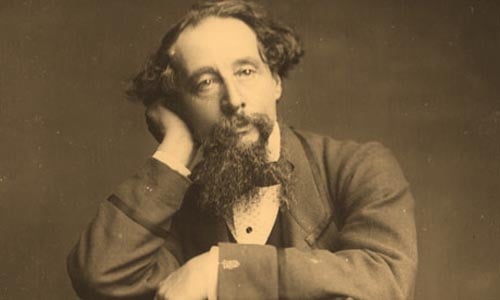
Mr Charles Dickens