Having eaten his fill of hot buttered crumpets, Mr Headstone felt obliged to sit in front of the fire in an attempt to promote the necessary operation of digestion. Once settled in a position that was closer to the horizontal than the vertical, the pedagogue felt it incumbent upon himself to close his eyes, and, as a result of the consequent deprivation of natural light, he was very soon breathing heavily through his nose, having attained a state that a medical man might easily have mistaken for a stupor.
It was not until two days had passed that Mr Headstone had another opportunity to open his calfskin notebook and turn to the task of recording his opinions on the first of Mr Dickens's great works. He began by writing the date at the top of the page, and, in both the execution of the act and in the contemplation of its issue, immediately became cognisant of the fact that a full month had passed since he had embarked on his great project.
This realisation of the transient nature of life was further impressed upon him by the sudden appearance of a little fierce woman in yellow curl papers, who bounced into the room, and announced, with a lack of ceremony that only long acquaintanceship could have accounted for, that the rent was due at the end of the week. Mr Headstone expressed his gratitude to his landlady for her trouble, and she replied, darting her eyes about the room to receive ocular confirmation of the continued existence of all the fixtures and furnishings, that it was no trouble at all, and that she hoped there would be no trouble on Friday when the bill was due. The interview between landlady and tenant being terminated on such agreeable and equitable terms, the former retired by degrees, three times poking her head around the door like a cuckoo in a clock to issue an advertisement of the approaching date.
Mr Headstone wondered why Time was so often depicted by the poets as an elderly personage with a long white beard when, in his experience, the gentleman was a bustling, harried individual, who - like the mail coach - would wait for no man. Lost in the immense field of conjecture opened by this reflection, the pedagogue gazed out of the window with a meditative visage, and might still be there had not his thoughts been interrupted by the appearance across the way of a pretty chambermaid airing some linen at an upper window of the house opposite.
Recalled to his task, Mr Headstone took up a sharp-nibbed pen and in a schoolmasterly copperplate hand, wrote out the full title of the book as it appeared on the original cover issued in 1836, viz "The Posthumous Papers of the Pickwick Club, Containing a Faithful Record of the Perambulations, Perils, Travels, Adventures and Sporting Transactions of the Corresponding Members". Mr Headstone was of the view that as a description of the contents the title was as scrupulous as a codicil, but as an appellation for referring to the work itself it was as cumbersome as a mangle. And yet, mused the pedagogue in a rare moment of insight, perhaps the rambling title was best suited to the rambunctious episodic manner in which the author narrated the story.
Mr Dickens could not be held responsible for the baggy appearance of the early chapters, which had been written to commission and were originally intended to provide a setting for the ornament of the illustrations by Mr Robert Seymour. The two gentlemen did not enjoy a harmonious professional relationship: Mr Dickens was young - only just twenty four - and fizzed like a bottle of champagne with vigour and ambition; Mr Seymour, fourteen years the author's senior, had had modest success as a political caricaturist and illustrator, but, having chosen his business acquaintances unwisely, was in a permanent state of financial embarrassment. The partnership between the two men was brought to a premature termination by Mr Seymour's decision to shoot himself through the heart with a fowling piece.
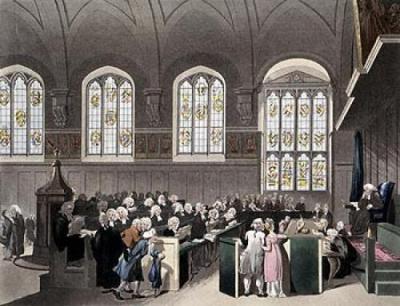
It was, thought Mr Headstone, a remarkable thing that out of such a sorry and tragic beginning there should come such a spirited and jolly work. With its larger than life characters and its improbable episodes, The Pickwick Papers is a book that has enough humour and humanity in it to make even the lawyers in the Court of Chancery laugh out loud, and the judges, too. Mr Dickens celebrates the upstanding and the right-minded, exposes the deceitful and the hypocritical, mocks the pompous and the proud, peeks into the dark corners of the debtors' prison, and then delivers his best-loved characters to a harmonious conclusion of matrimony. Between the pages there is pantomime, intrigue, romance, sentiment, comedy (both high and low), adventure, mystery, and melodrama, and when the final page has been turned and the book closed, the reader feels a sudden loss at no longer being in the company of those excellent Pickwickians and their faithful followers and friends.
Mr Headstone, finding himself becoming affected by the emotional intensity of his own sentiments, put down his pen, and from the shelf took down a copy of Oliver Twist, which, he observed with a certain degree of satisfaction, was fewer than five hundred pages in length.
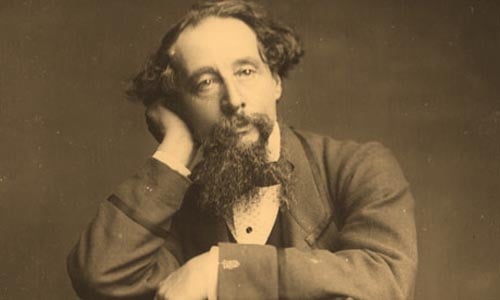
Mr Charles Dickens