Having gained his liberty from one of the country's most notorious gaols thanks to the tireless endeavours of the selfless Mr Brownlow, Mr Headstone regrettably found that he was unable to extricate himself from that gentleman's company with as much ease. He suffered the elderly samaritan to accompany him down the steps, across the courtyard, through the great iron door that was closed to so many, out onto the bustling pavement, and into the tumult of the great city. All the while Mr Brownlow regaled his companion with a repetition of his account of the circumstances that had brought him to that place, either in the mistaken assumption that the pedagogue would be pleased to hear the lengthy narrative from its beginning to its end once again, or from a misapprehension not uncommon in an elderly person that he was recounting the story for the first time.
The prison from which Mr Headstone had just been released was in the region of Snow Hill, which, by a remarkable and fortuituous coincidence, was also the very ground upon which stood that place of sanctuary commonly known as The Saracen's Head. His pockets being empty and the chalk marks against his name behind the bar being many, Mr Headstone resolved to further endure the company of his kind redeemer on the expectation that he would be willing to once again demonstrate his charitable nature by paying the reckoning. The pedagogue intimated to Mr Brownlow his desire to seek spiritual refuge in a nearby site of contemplation, and, directing his gaze meaningfully towards the spire of St Sepulchre's, led the pious gentleman along Skinner Street until they arrived at number forty nine.
Mr Brownlow expressed some surprise at finding himself outside a tavern, and evinced a strong disinclination to enter the bar until Mr Headstone had gathered some other members of the faith from within to persuade that worthy of their strong desire to celebrate his benevolence and his charity, expressing a most particular interest in the latter. Mr Brownlow's apotheosis was rapidly achieved by the passing round of some brandy and water and by the singing of songs, which, though not to be found in any hymnal, were pretty well known by the entire congregation.
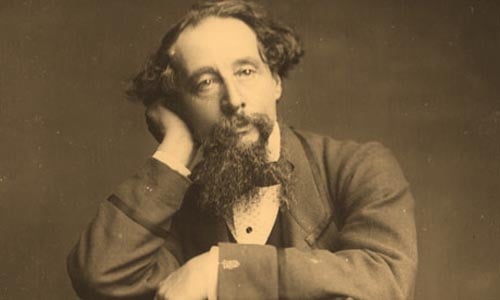
Mr Charles Dickens