Being the organ of a pedagogue, Mr Headstone's brain was naturally a depository for a great many items of uncommon knowledge. Like the great Pantechnicon Building in Belgrave Square, his mind was a warehouse wherein he stored a great deal of intellectual lumber inherited from a lifetime of peripatetic study: arcane facts, proverbs and sayings, historical dates, the names of kings and queens, rules of English grammar, mathematical equations, laws of physics, philosophical propositions, weights and measures, legal precedents, medicinal remedies, Latin and Greek declensions, & co, & co.
The accumulation of knowledge is a practice that can only be applauded by all right-thinking persons, and, though many may agree that a little quantity of that particular article is not necessarily always displayed to an advantage, few would be of the opinion that a man should be condemned for knowing too much. In truth, Mr Headstone could not even be accused of such a crime - were it ever to become one by being enshrined in the statute books - for he invariably found that his mind, being so very full of curios (some dusty and undisturbed for years, some sheeted like forgotten ghosts, or corrupted by mildew and woodworm), never gave up its hidden treasures when they were most needed. If Mr Headstone ever gave the appearance of being lost in thought, it was not because he was a deep thinker, but rather because he was but a poor navigator of the intellectual territories through which he travelled.
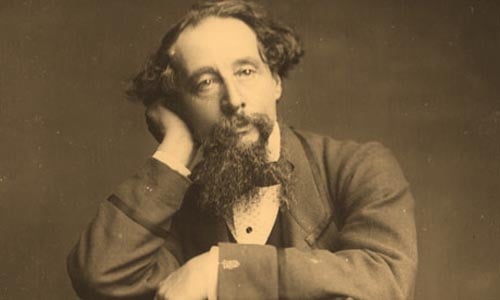
Mr Charles Dickens