Having returned to his lodgings from a visit to Newgate, Mr Headstone was most desirous to pick up the threads of his old life, and, with this object in mind, he ordered in a dozen crumpets and settled himself in close proximity to a blazing fire, the crimson coals of which performed the twin offices of warming his bones and toasting the aforementioned comestibles. His own particular comfort was made complete by the placement of a glass of generous port within easy reach on the round cedar coffee table, and, with the bottle safely stowed on the chimney-piece in case it was wanted, the pedagogue opened Oliver Twist to the page at which he had been obliged to leave off by the inconvenient intervention of the law.
The month of February - having (like a condemned man) been granted a day's reprieve - was almost at its end, and Mr Headstone, conscious of having fallen behind in his great project, read with as much speed and concentration as the warmth of the fire, the heat of the alcohol, and his appetite for crumpets would allow. Having finished the book as the shades of evening were drawing in, he lit a candle and sat himself at his writing desk, and took up his pen to record some reflections of a literary nature.
Oliver Twist; or, the Parish Boy's Progress was Mr Dickens's second novel, and it was begun by the author before he had even completed his first. Mr Headstone could not quite approve of this way of working as he himself was never a man to take up a new task when an old one still remained undone - a convenient philosophy which allowed him to regulate his labours according to his own desires. Coming from the pen of 'Boz', the creator of the Pickwick craze, the story of the orphan boy was received with enthusiasm by the reading public although - as the author himself observed - it was also objected to on some high moral grounds in some high moral quarters. The depiction of the associates in crime in all the squalid misery of their lives was necessary to point out the principle of good surviving through every adverse circumstance; and if the diet of wretchedness was too severe to be taken at once, then there were several courses of comic intervention to soothe the palate. As Mr Dickens himself phrased it at the beginning of Chapter Seventeen, "it is the custom [...] in all good murderous melodrama to present the tragic and the comic scenes, in as regular alternation, as the layers of red and white in a side of streaky bacon." Recalling this figure of speech, Mr Headstone, who approved of all forms of pork meat (fried, broiled, or roasted), wondered whether it would not be an appropriate occasion for ordering in something from the German-sausage shop round the corner, particularly as he had just appended the last crumpet to his toasting fork.
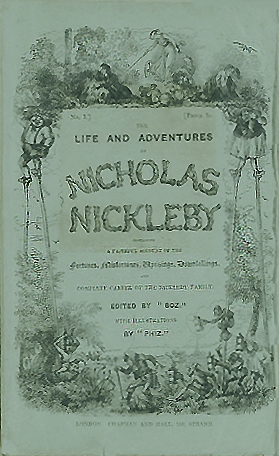
The pedagogue returned Oliver Twist to the shelf, reflecting as he did so that had he been apprised of the true character of Bill Sikes, he would never have suffered the gentleman's acquaintance, and so might have avoided that portion of misfortune which had so recently been allotted to him. He took down The Life and Adventures of Nicholas Nickleby, a volume about twice the length of the book he had just completed. Feeling in immediate need of sustenance, the pedagogue put his head out of the window and called down to the butcher's boy.
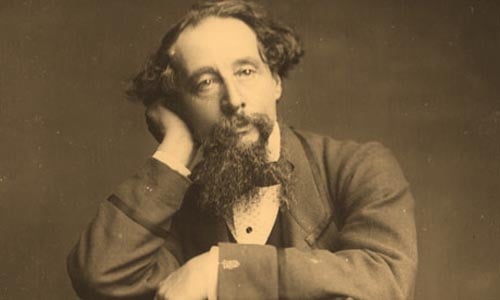
Mr Charles Dickens